The short answer fits in a sentence: keep cologne somewhere cool, dark and dry, in its box, with the cap on, and never in a bathroom or a car. If that is all you came for, you can stop here and your bottles will outlive you.
The useful part is the why, because it changes what you do with the awkward cases — the half-empty bottle, the one you want in your gym bag, the collection you are not going to get through for a decade. And there is one consequence of bad storage that almost nobody writes about: an oxidized fragrance is not only staler than a fresh one, it is measurably more likely to irritate your skin. That is the part of this page worth reading even if you already knew about the bathroom.
The four things that ruin a bottle, in order
Cologne is a solution of fragrance materials in alcohol. Nothing in it is alive, so nothing in it spoils the way food does. What happens instead is slow chemistry: molecules react with oxygen, with each other and with energy delivered as heat or light, and the composition drifts away from what the perfumer blended. Four agents drive it, and they are not equally important.
1. Heat, by a wide margin
Reaction rates climb with temperature. The working rule of thumb in chemistry is that a rise of about 10 °C roughly doubles the rate of a typical reaction — which means a bottle kept at 30 °C is aging at something like twice the rate of the same bottle at 20 °C, and the gap compounds. Nothing else on this list has that kind of leverage. Fragrance retailers who publish storage guidance generally recommend something in the 12–21 °C (55–70 °F) range, and consistency matters as much as the absolute number: a shelf that swings from cool overnight to warm every afternoon is worse than a slightly warmer cupboard that never moves.
2. Light, specifically ultraviolet
UV photons carry enough energy to break chemical bonds directly, which is why fragrance ages visibly as well as olfactorily — a juice that has been sitting in daylight darkens, often noticeably, long before anyone would call it off. Clear glass does very little to stop UVA. This is the whole argument for the cardboard box the bottle came in, which is a far better UV filter than the glass is, and the argument against the display-the-collection-on-the-windowsill instinct. If you want your bottles visible, put them somewhere a sunbeam never reaches.
3. Oxygen, which you add every time you spray
A sealed bottle has almost no air in it. A bottle you have used half of has a headspace full of air, and every spray pulls more in. Autoxidation — fragrance materials reacting with atmospheric oxygen — is the main mechanism by which a bottle actually goes off, and it is the one you cannot avoid, only slow. Practically: the last quarter of a bottle ages faster than the first quarter did, so a fragrance you use rarely and own for years is in more danger than one you wear every day.
4. Humidity, mostly as a proxy for the bathroom
Moisture is the weakest of the four on its own, but the place in your home with the highest humidity is also the place with the biggest temperature swings, and most people keep their cologne there. A bathroom cabinet repeatedly heats to shower temperature and cools again, in damp air, several times a day. It is the single most common storage mistake in the category, and it is bad for reasons one and four at once.
The part nobody mentions: oxidized fragrance irritates skin
This is documented rather than speculative, and it is specific. Terpenes — the class of materials that includes limonene from citrus peel and linalool from lavender, two of the most widely used fragrance ingredients in existence — are not themselves significant skin sensitizers. Their oxidation products are. Autoxidation on exposure to air converts them into hydroperoxides, and those are allergens.
The clinical work on this came out of Göteborg University's dermatochemistry group. A 2002 paper in Contact Dermatitis identified a linalool hydroperoxide formed by autoxidation and demonstrated its sensitizing capacity. A larger 2005 study in the same journal patch tested 1,511 consecutive dermatitis patients across six European dermatology centers against oxidized fragrance terpenes: 1.3% reacted to oxidized linalool and 1.1% to its hydroperoxide fraction, and 58% of the patients who reacted to an oxidized terpene had fragrance-related contact allergy or a history of adverse reactions to fragrance. The authors' conclusion was that autoxidation of fragrance terpenes contributes greatly to fragrance allergy — and that patch testing needs to use the oxidized compounds people are actually exposed to, not the pristine ingredients as blended.
The practical reading is simple and it is not alarmism. These are single-digit percentages in a population of people who already have dermatitis, so this is not a reason to be frightened of your cologne. It is a reason to take the cap seriously, to keep bottles out of the heat, and to stop wearing one that has visibly or obviously turned rather than pushing through. If you already react to fragrance, our guide to cologne allergies and sensitivities covers the ingredient side of that in detail.
It also tells you which bottles to prioritize. Citrus-led and lavender-led fragrances are built on exactly the materials in that research, so they are both the fastest to smell stale and the ones where storage carries the most weight — one more reason the citrus shelf rewards care.
Where to actually put it
- Best: a closed drawer or cupboard in an interior room, bottle in its original box. A bedroom dresser or a hallway closet on an inside wall is cool, dark, dry and stable. That is the whole answer, and it costs nothing.
- Fine: a wardrobe, a sideboard, a closed shelf away from a window. Interior walls beat exterior walls, and low beats high — warm air collects at the top of a room.
- Avoid: the bathroom. Heat and humidity cycling, several times a day, for years.
- Avoid: a windowsill, a vanity under a skylight, a glass display cabinet in a sunny room. Looks wonderful, functions as an oven with a UV lamp.
- Avoid: on top of a radiator, a TV, a games console or a fridge. Anything that exhausts warm air is a bad shelf.
- Never: a parked car. See below, because this one is worse than people imagine.
The car is the worst place in your life for a bottle of cologne
"How to store cologne in a car" is one of the most searched versions of this question, and the honest answer is that you cannot. The numbers are not marginal. A 2005 study in Pediatricsmeasured temperature rise in a dark sedan on sixteen clear sunny days with outside temperatures from 72 to 96 °F and found an average rise of 3.2 °F every five minutes, with 80% of the total increase arriving in the first thirty minutes — and the rate did not depend much on how warm it was outside. Earlier work it cites found that on days above 86 °F, interiors reached 134 to 154 °F. Cracking the windows an inch and a half made little difference.
Put that next to the ten-degree rule. A glovebox at 60 °C is running the clock on your bottle something like sixteen times faster than a drawer at 20 °C, every sunny afternoon, cycling back down every night. Add direct sunlight through glass and you have assembled the worst case on this page from three of the four agents simultaneously. A car is fine as a place a fragrance passes through. It is not a place one lives.
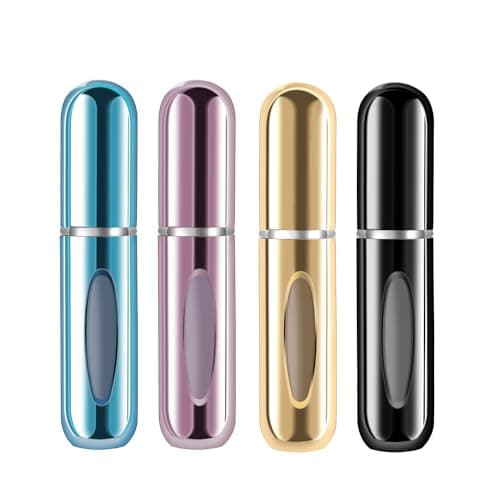
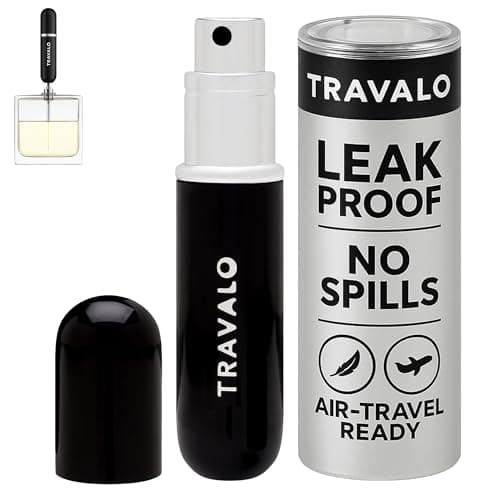
If what you want is cologne available when you are out, the answer is to carry a few milliliters in a pocket and leave the bottle at home. That is what the two products below are for.
Does the fridge work?
Cold slows chemistry, so in principle yes — and a dedicated wine or beverage fridge held around 12–15 °C is genuinely good storage, which is why serious collectors use them. The kitchen fridge is a worse idea than it sounds. It runs colder than fragrance needs, it is opened and warmed dozens of times a day, it is full of food odors, and a bottle taken out into a warm room gets condensation on and around the glass. Unless you live somewhere with no cool dark cupboard at all, a drawer beats the refrigerator. Freezing is not useful: it does not improve anything and it risks the juice, the seal and the glass.
The half-empty bottle problem
Once a bottle is mostly air, the oxygen in that headspace is working on the contents continuously. There is no elegant fix, but there are three sensible responses. The first is to simply use it — a fragrance you wear down in a year never gets the chance to oxidize, which is an argument for owning fewer bottles rather than more. The second is to decant what is left into a small atomizer and keep it nearly full, so the air-to-liquid ratio comes back down. The third is to buy smaller bottles in the first place for anything you know you will wear occasionally; our guide to how long a bottle lasts works out the arithmetic on what size you actually need.
Do not transfer fragrance into a non-airtight container, do not dilute it, and do not pour it into a plastic bottle for a trip — alcohol is a solvent and cheap plastic is not inert. Glass or proper metal-and-glass atomizers only.
Storing a collection long term
If you own more bottles than you can get through, you are in the preservation business and the rules tighten slightly. Keep everything boxed. Keep the boxes in one closed container in the coolest interior spot you have, so the mass of the whole collection damps temperature swings. Keep sealed bottles sealed until you intend to start one, because an unopened bottle ages dramatically more slowly than an opened one. Write the purchase date on the box in pencil, which costs nothing and tells you later which bottle to suspect. And accept the trade honestly: a bottle you are preserving is a bottle you are not enjoying.
For how to tell when a bottle has actually turned — the sour or metallic opening, the darkened juice, the top notes that have gone missing while the base survives — see does cologne expire, which covers shelf life and the warning signs in full. This page is about preventing that; that one is about recognizing it.