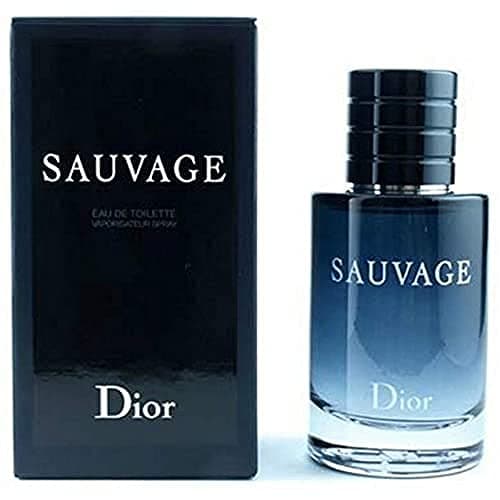
Short answer: yes, if it is going to be the one bottle you own and wear everywhere — the performance is real and the versatility is genuinely hard to beat. No, if you already own something fresh and spicy, if smelling distinctive matters to you, or if the same money would buy you three bottles that each do a job properly.
"Is it worth it" is a different question from "is it good," and most pages answer the wrong one. Sauvage is good; that has never really been in dispute. What people want to know before they hand over designer money is what the extra spend buys over a bottle costing a fifth as much, and whether the answer changes now that the scent is everywhere. That is what this page is for. If you want the scent breakdown instead — how it opens, how it dries down, what it actually smells like on skin — our full Dior Sauvage review is that page.
What the money actually buys
Three things, and it is worth separating them, because only two of them are worth paying for.
The performance. This is the real one. Sauvage is an eau de toilette that behaves like an eau de parfum: wearers consistently report all-day wear from two sprays and a projection cloud that fills a room for the first couple of hours. Most EDTs at half the price do not do that. If you have been buying cheap fresh scents and re-spraying at lunch, the upgrade is immediately obvious and it is the single most defensible part of the price.
The versatility. Bright bergamot over a big ambroxan base is about as situation-proof as fragrance gets: not too sweet for an office, not too casual for a dinner, not too heavy for spring. A bottle you wear four times a week is worth far more per dollar than one you wear four times a year, and that is the crux of the value case — the expensive-looking purchase is frequently the cheaper one once you divide by wears.
The name. This is the part to think hardest about. Some of the price is the Dior logo and the marketing budget behind it, and unlike the other two it delivers nothing to your nose. Whether it is worth anything depends entirely on whether you value wearing a scent other people recognize. For some buyers that recognition is the whole point. For others it is exactly the reason to walk away.
The cost-per-wear math, done properly
The honest way to compare a designer bottle against a budget one is not the sticker price, it is what one wearing costs you. A 3.4 oz bottle holds about 100 ml, and a standard atomizer delivers roughly 0.1 ml per spray, so a full bottle is in the region of a thousand sprays — call it five hundred wears at the two sprays Sauvage actually needs. Divide today's live price by that and the per-wear cost of a designer bottle you genuinely love lands in small-change territory.
That math is why we score value at seven rather than four. It is also why the math collapses in one specific case: a bottle you get bored of after thirty wears costs you more than fifteen times as much per wear as one you finish. The money gets wasted after the checkout, not at it — which is the entire argument for wearing a sampler set first.
Which Sauvage is the smart buy?
There are four, they are not four strengths of one fragrance, and buying the wrong one is the most common way people overpay here. All four were signed by then-Dior in-house perfumer François Demachy.
| Version | Launched | The idea | Worth it when |
|---|
| Eau de Toilette | 2015 | Calabrian bergamot driven into ambroxan, elemi and woods. Bright, sharp, clean. | You want the reference version and the most versatile of the four. Start here. |
| Eau de Parfum | 2018 | The same bergamot opening, then Sichuan pepper, lavender and star anise into a vanilla-and-ambroxan base. | You liked the EDT and want it warmer and sweeter for cold weather. |
| Parfum | 2019 | The densest, most amber-woody reading of the accord. | You already know you love it and want the richest version of it. |
| Elixir | 2021 | A different fragrance, not a stronger one: nutmeg, cinnamon, cardamom and grapefruit over lavender, into licorice, sandalwood, amber, patchouli and Haitian vetiver. | You specifically want the spice-and-licorice direction. Sample it — do not assume it is "Sauvage but more". |
For a first purchase the EDT is the value pick every time: it is the cheapest of the four, the most wearable across seasons, and the version the whole reputation was built on. The Elixir is the one that catches people out. It shares a name and very little else, and buying it blind because it sounds like the strong one is how you end up with a bottle you never reach for.
When it is worth it
- You own one bottle, or none. If this is going to be your everything-scent, the versatility earns the money back. Nothing in the budget tier covers as much ground as reliably.
- You need a bottle that cannot embarrass you. A job interview, meeting the parents, a wedding you are in. Sauvage is engineered to be liked, and there is real value in not having to think about it that morning.
- You are buying a gift. The recognition you might personally dislike is exactly what makes it a safe present for someone whose taste you do not know. Our gift-set roundup has the boxed versions.
When it is not worth it
- You want to smell like yourself. This is the honest dealbreaker. It is the most-worn men's fragrance there is, and no amount of performance fixes the fact that other people in the room are wearing it too.
- You already own a fresh-spicy bottle. If there is a bergamot-and-ambroxan scent on your shelf, Sauvage is a duplicate purchase. Buy a different lane instead — something warm for winter, or something genuinely light for real heat.
- Budget is the binding constraint. The clone houses reached this accord years ago, and at Sauvage money you could own three bottles that each cover a season properly. Our Sauvage alternatives and dupes page prices that trade-off side by side.
The cheaper routes to the same idea
Two are worth knowing about. The first is the clone route: houses like Armaf and Lattafa build original fragrances around the same fresh-spicy-ambroxan idea for a fraction of the money, and Armaf Club de Nuit Intense Man is the standard-bearer for performance-per-dollar in that lane. They are not counterfeits, and the difference matters — our honest take on clone houses explains where the seams actually show.
The second is simply buying less of it. You almost certainly do not need 3.4 oz of your first designer bottle. A decant or a travel size gets you a full season of wear for a fraction of the spend, and if you still want the big bottle in three months you have lost nothing. Our travel-size and decant guide covers the formats.
Our verdict
Sauvage is worth it as a one-bottle solution and as a safe gift. It is not worth it as a fourth fresh scent, and it is not worth it if the goal is to stand out. That is the whole answer. The performance is not marketing — it really does outlast most of its price bracket — but go in knowing that a meaningful slice of the price is the name, and that the name is precisely what guarantees you will smell it on somebody else this week.
If this would be your very first bottle, do not start here on instinct. Work through our first fragrance buying guide instead: wear it for a day from a sampler, decide whether the ubiquity bothers you, and then buy once. If it survives that test, it is worth every dollar.