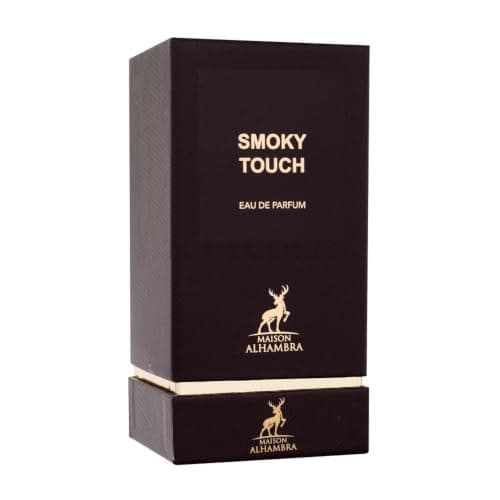
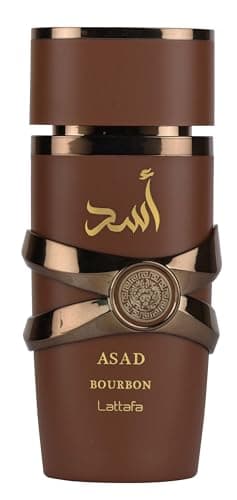
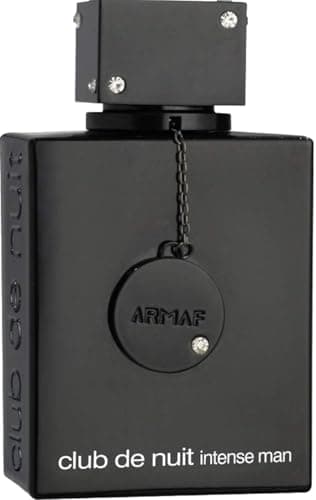
Short answer: usually yes, with three specific exceptions. A good clone gets you most of the way to a famous fragrance for roughly a tenth of the money, and the gap between "most of the way" and "there" is smaller than the price difference suggests. What you give up is refinement, consistency and the confidence that the bottle will still exist in three years.
This page exists because the question gets asked constantly and almost never answered honestly. The clone houses will not tell you what they give up, and the designer-loyal side of the hobby will not admit how good some of these bottles are. Here is the version with both halves.
First: a clone is not a counterfeit
This distinction is the whole foundation, and a lot of people get it wrong. A clone(or "dupe," or "inspired-by") is an original fragrance, sold under its own brand name, deliberately composed to evoke a famous designer scent. Lattafa Asad is a Lattafa product. Armaf Club de Nuit Intense Man is an Armaf product. Neither claims to be anything else, and neither is illegal: fragrance formulas are generally not protected the way logos and trademarks are, so building a composition around a similar accord is allowed.
A counterfeitis a bottle that claims to be a designer product it is not — fake packaging, fake logo, unknown liquid inside. That is fraud, it is illegal, and the contents are genuinely unpredictable in a way that occasionally matters for your skin. We never link counterfeits, and our guide to spotting fake cologne exists to help you avoid buying one by accident.
Everything on this page, and everywhere in our dupes hub, refers to the first category.
What you actually gain
- The money, obviously. The gap is not marginal. A clone-house bottle commonly costs a small fraction of the designer it evokes, and it is frequently a larger bottle.
- Often, better performance. This surprises people. The best clone-house bottles project harder and last longer than the designers they reference, because they are built with performance as the headline feature rather than as one consideration among many.
- Permission to experiment. The real hidden value. At these prices you can own five bottles instead of one, try a style you are unsure about, and be wrong without it mattering. That is how people actually learn what they like.
What you give up
- Refinement.The most consistent honest criticism. Clone-house blends tend to be less smooth, with rougher transitions between phases and a slightly flatter dry-down. The difference is real, and it is most noticeable in delicate compositions — a bright citrus or a soft floral — and least noticeable in loud, warm, spiced ones.
- Consistency. Batch-to-batch variation is reported more often for budget houses than for designers. We have not measured it and will not claim to, but the reports are frequent enough to mention.
- Longevity of the product line. Designer scents stay in production for decades. Clone-house releases come and go, so the bottle you fall in love with may not be buyable in three years.
- Closeness is usually approximate. Even the best impressions are same-idea rather than same-scent. Anyone who has smelled both usually knows which is which.
The three situations where a clone is the wrong call
1. When you want the specific thing.If what you love is a particular fragrance — its exact texture, its exact dry-down — then a bottle that gets eighty percent of the way there will irritate you every time you wear it. Buy the original, or buy nothing. Being nearly right is worse than being obviously different.
2. When the composition is delicate.Clone houses are strongest at loud and warm, weakest at subtle and airy. If the reference scent is famous for lightness or transparency, the clone will almost certainly be heavier and sweeter — which is exactly the criticism we make repeatedly in our Baccarat Rouge 540 dupes roundup.
3. When it is a gift.This is a social rather than an olfactory point, and it matters. If someone knows fragrance, being given a clone of a scent they wanted lands differently from being given the scent. If they do not know fragrance, they will simply enjoy it — but you cannot always tell which you are dealing with. Our gift set roundup covers safer options.
How to buy one well
Buy the clone that stands on its own. The best purchases in this category are bottles you would be happy to own even if you had never smelled the original — and the honest test is whether the description makes you want to wear it, not whether the comparison makes you want to save money.
Check the volume before you buy, because listings for the same name appear in several sizes. Buy from sellers with real feedback. And accept that scoring similarity is a compiled community judgment rather than a lab measurement — nobody publishing these comparisons, including us, is running a gas chromatograph. Where we say something is close, we mean large numbers of people who have smelled both say so.
Three bottles below make the case better than any argument can. Each one represents a different reason to buy a clone: performance, closeness, and standing on its own.