Buy online for price and range; use a department store counter to smell things first. That combination - test in person, buy where it is cheapest - is what experienced buyers do, and it routinely saves 30 to 60 percent against counter pricing on widely-distributed designer bottles.
A disclosure before the comparison, because it matters here more than on any other page: this site earns affiliate commission when you buy through our links, mostly from Amazon. That does not change what follows - we rank the channels on what they are actually good at, and we say plainly where Amazon is the wrong choice. Our full affiliate disclosure explains how we are funded.
Department stores and beauty retailers
Good for: smelling things. This is the only channel where you can test a dozen fragrances on skin in an afternoon, which is genuinely valuable and worth using even if you buy elsewhere. Bad for: price. Counter pricing is close to full retail and rarely discounted outside sale periods. Authenticity risk: effectively zero.
One practical tip: spray on skin, not on a card, and leave without buying. Wear it for a few hours and see whether you still like it at hour three. The counter is optimized for the first thirty seconds of a fragrance, which as our notes guide explains is the part that disappears.
Online discounters
Good for: price on mainstream designer bottles. Fragrance discounters buy overstock and gray-market inventory and sell it well below counter pricing. Bad for: the newest releases, and occasionally packaging condition - tester bottles and unboxed stock are common. Authenticity risk: low to moderate depending on the retailer; stick to established names.
Amazon
Good for: range, speed, returns and clone-house fragrances. Arabian and clone-house brands like Armaf, Lattafa and Al Haramain are effectively an online-only category, and Amazon is where most of them live - our dupes roundup is almost entirely Amazon buying. Bad for: certainty about the seller on expensive designer bottles. Authenticity risk: low on cheap bottles, higher on expensive ones - counterfeiting follows margin.
The practical rule is to check who is actually selling. A listing sold and shipped by Amazon, or by the brand itself, carries far less risk than a third-party seller you have never heard of. Read recent reviews for complaints about weak scent or odd packaging, which is what fakes generate.
Buying direct from the brand
Good for: guaranteed authenticity, gift sets and exclusives, and reliable returns. Bad for: price - direct is usually the most expensive channel. Authenticity risk: zero. This is the right choice for an expensive niche bottle where a fake would be both likely and painful.
Subscriptions and decant services
Good for: trying a lot of designer fragrances cheaply, one month at a time. Bad for: value if you already know what you like - you are paying a premium per milliliter for the convenience. Our subscription comparison covers the main services properly.
How to avoid a fake
Counterfeit fragrance is a real problem and it concentrates on expensive, famous bottles - nobody bothers faking a $20 clone-house EDP. Four rules cover most of it. First, be suspicious of impossible discounts: 80 percent off a current designer release is not a bargain, it is a warning. Second, buy from the seller, not just the site - check who fulfills the order on any marketplace. Third, read the recent reviews for mentions of weak performance, wrong color juice or sloppy packaging. Fourth, use a channel with real returns, so a bad bottle costs you time rather than money.
The strategy that actually works
Test in person, buy online. Go to a counter, try three or four fragrances on skin, walk away, and see which one you still want at the end of the day. Then buy that bottle from whichever channel is cheapest and trustworthy. You get the one thing physical retail does uniquely well and the one thing online does uniquely well, and you avoid paying for both.
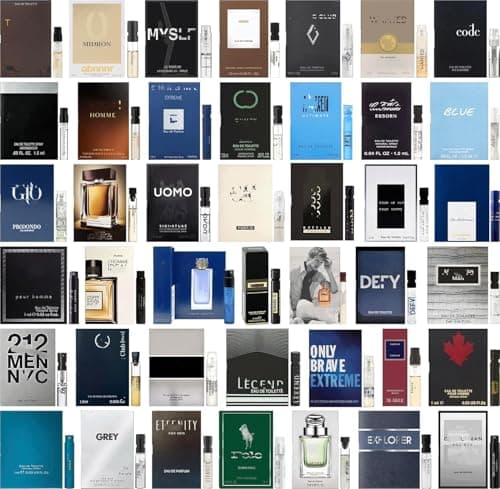
If you do not live near a good counter, buy a sampler set instead - it solves the same problem at home for very little money, and it lets you wear each scent for a full day rather than sniffing it for ten seconds under shop lighting.
When each channel is the right answer
Clone-house and Arabian fragrances: online, almost exclusively - they are rarely stocked in physical stores. See the Lattafa roundup. Mainstream designer bottles: discounters or a well-fulfilled marketplace listing, where the savings are largest. Expensive niche or luxury bottles: direct from the brand or a department store, where authenticity is certain. Gifts: wherever the presentation is best - our gift set roundup covers that.
On prices, and why we do not quote them in text
Fragrance pricing moves constantly - the same bottle can swing 40 percent in a month across channels. That is why every price on this site is pulled live and date-stamped rather than typed into an article, and why we describe cost in brackets (budget, designer, premium) in prose. If a figure cannot be verified live, we show "check price" instead of a number. The reasoning is on how we review.