Yes, it is real, and the main driver is boring: how oily your skin is. Fragrance oils dissolve into the natural oils on your skin and evaporate from them over hours. Oilier skin holds the molecules longer and lets the heavier base notes develop; dry skin lets the light top notes flash off and the whole thing finish early. That one difference explains most of what people mean when they say a cologne smells different on them — and it is why the paper strip in the shop is close to useless as a guide to what you will actually wear.
This is a different question from why you cannot smell your own cologne, which is about your nose adapting. This page is about the fragrance itself genuinely behaving differently on different skin.
The five things that actually change it
- Skin oil (sebum). The big one. Fragrance needs something to sit in. On oily skin, scents last longer and read richer and sweeter because the base notes get their full run. On dry skin, the same bottle can be gone in two hours and never reach its drydown at all.
- Skin temperature.Heat drives evaporation. Warm skin projects more and burns through a fragrance faster; the same two sprays that are perfect in a cold queue are a lot in a warm room. This is also why pulse points work — they are simply the warmest spots.
- What you washed with. Scented soap, shower gel, deodorant and shaving products all leave residue, and that residue is the first layer your cologne sits on. A strongly scented antiperspirant will change what a fragrance smells like on you more than your genetics will. Our cologne versus deodorant guide covers how to stop the two fighting.
- Skin pH and sweat. Skin surface acidity varies between people and across a day, and sweat adds its own smell on top. Both can push a composition sweeter or sourer. The effect is smaller than the internet claims, and considerably smaller than the oil effect.
- Diet, hormones and medication. These can change your natural body odour, which is the baseline a fragrance is layered over. Real, but the least predictable factor here and not something to plan a purchase around.
Why the paper strip lies
A blotter has no oil, no heat and no body odour. It shows you the composition in isolation, which is useful for the first thirty seconds and misleading after that: the top notes you smell on paper are precisely the part that will be gone fastest on skin, and the drydown that decides whether you actually like a bottle barely develops on cardboard at all.
The same applies, slightly less severely, to smelling a fragrance on somebody else. What you are smelling is the fragrance plus their skin, their soap and their dose. It is a reason to try something, never a reason to buy it unsmelled on yourself.
How to test properly before you buy
- One fragrance at a time, on skin. Two sprays on a forearm or the neck, then leave it alone. Your nose saturates after three or four scents, so a six-bottle session tells you nothing useful.
- Wait four hours. The opening is marketing; the drydown is what you will wear. Judging a fragrance in the shop is judging the part that lasts fifteen minutes.
- Test on a normal day. Same soap, same routine, same kind of weather you will usually wear it in. Heat changes everything.
- Try it twice. Skin changes across a week. If a bottle reads well on two separate days, it will read well generally.
That process needs samples rather than full bottles, which is the whole argument for the two picks below. They are not a fix for skin chemistry — nothing is, and anything claiming to be should be ignored — they are the cheapest way to find out how a fragrance behaves on your skin before you commit 100 ml to it.
The short answer
Quick picks
#ad · Live prices from the Amazon Product API, as of October 18, 2026. Where we have no verified live price, we show none — a gap beats a number that has rotted.
In detail
The picks, in full
Best way to test on your own skin
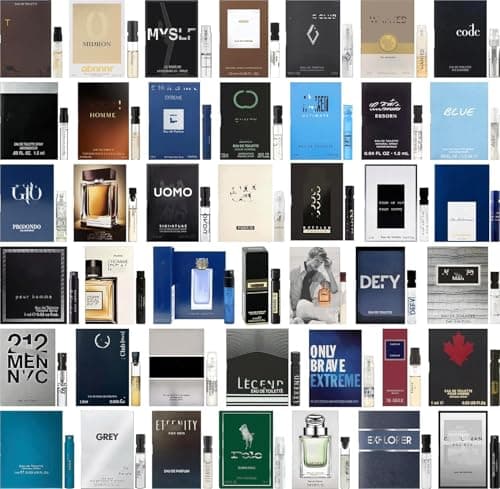
Men's Cologne Sampler Set (11 designer samples)
11 samplesMulti-brandVialsDiscovery
The right tool for this job: eleven houses on your own skin for less than the price of one bad full bottle.
- Range
- 10
- Value
- 9
- Usefulness for testing
- 10
Pros
- +Eleven separate fragrances, so you can run the four-hour test properly
- +Covers multiple houses and styles rather than one brand's view of the world
- +Cheap relative to the number of scents
- +Turns a guess into an experiment with a real answer
Cons
- −Very small volumes - a day or two per scent
- −Vials feel disposable next to a boxed set
- −Contents vary between listings; check what is currently included
Don't buy this if…
…you already know which fragrance you want - buy the full bottle instead
If a fragrance smells different on you than it did in the shop, the answer is not a different shop — it is wearing it for a day before you buy it. Eleven vials gives you nearly two weeks of one-a-day testing, which is enough to learn both what you like and how your skin treats it. Our sampler sets roundup ranks the alternatives.
Best for testing rich, sweet scents
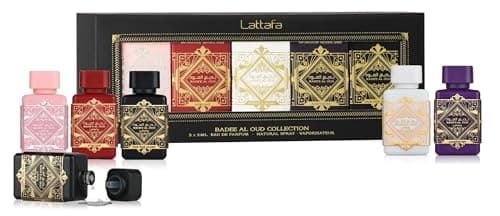
Lattafa Bade'e Al Oud Discovery Set (5 x 5ml)
5 x 5 mlOne houseDecantsAmber / oud
The heavier test: five 5 ml decants of rich amber-oud fragrances, which are exactly the kind that skin chemistry changes most.
- Range
- 6
- Value
- 9
- Usefulness for testing
- 9
Pros
- +5 ml each is enough for several full wears, not a single sniff
- +Rich amber and oud profiles are where skin differences show up most
- +Far cheaper than guessing on a full bottle of the wrong one
Cons
- −One house only, so the range is narrower than a multi-brand set
- −All in the same broad family - not a test of whether you like that family
- −Sweet, heavy scents are the hardest to judge in a shop and the easiest to over-apply
Don't buy this if…
…you already know sweet amber fragrances are not for you
Worth knowing: the fragrances most affected by skin differences are the rich, sweet, resinous ones — amber, oud, vanilla, gourmand — because they have the most happening in the base, and the base is the part your skin oil decides the fate of. A set of 5 ml decants in exactly that family is the most informative test you can run cheaply. Our oud for beginners guide is the right companion.
What to do if a fragrance dies on your skin
If scents routinely disappear on you within a couple of hours, you most likely have dry skin, and there are three fixes that genuinely work.
Apply to moisturized skin. An unscented lotion before spraying gives the fragrance oil something to hold onto, and it is the single most effective thing on this list. Spray fabric as well as skin. Cotton holds fragrance far longer than dry skin does, which is why a sprayed collar is still noticeable hours later. Buy higher concentrations.An eau de parfum has meaningfully more perfume oil than an eau de toilette, and on dry skin that difference is the difference between four hours and eight — our concentrations guide has the numbers, and how to make cologne last longer has the full list of fixes.
What skin chemistry does not explain
Two things get blamed on skin chemistry that are usually something else.
"It faded after an hour."Usually your nose, not your skin. Olfactory adaptation sets in within about fifteen minutes and other people can still smell you perfectly well. Check with somebody else before you add sprays — this guide explains the mechanism.
"This bottle smells wrong."Sometimes it is a reformulation, a different concentration of the same name, or a counterfeit. If a fragrance you know well smells distinctly off from a new bottle, check the batch code and the seller before blaming your skin — our how to spot fake cologne guide covers the checks.
The practical upshot
Buy samples, test on skin, wait four hours, and judge the drydown. If your skin runs dry, favour eau de parfum and apply to moisturized skin; if it runs oily, you can wear lighter concentrations and should be more careful with sweet, heavy scents, which will project harder on you than on most people. Our how to try cologne before buying guide is the step-by-step version, and our how to choose your first cologne guide puts it in order for a first purchase.
How we picked
We did not lab-test this gear
Everyone in this category says they tested twenty products. We have not lab-tested any of these, and we say so. What we did instead: compiled the published specifications, decoded the ingredient (INCI) lists active by active, ran the math where there was math to run, and scored each product against a published rubric. The scores are judgments from documented research — not measurements we took, because we do not have a lab and we will not pretend we do. Where a number came from someone else's work, we name them in Sources.
Questions
Frequently asked
Why does cologne smell different on me than on someone else?+
Mostly skin oil. Fragrance dissolves into the oils on your skin and evaporates from them, so oilier skin holds it longer and lets the base notes develop, while dry skin loses the light notes quickly. Temperature and whatever you washed with add to it.
Does skin pH really change how cologne smells?+
It can, a little. Surface acidity varies between people and across the day and can push a composition slightly sweeter or sharper. The effect is much smaller than how oily or dry your skin is, which is the factor that actually decides the outcome.
Why does cologne smell good on the paper strip but not on me?+
A blotter has no oil, no heat and no body odour, so it shows the composition in isolation — mostly the top notes, which are the part that disappears fastest on skin. Always test on skin and wait a few hours before judging.
How do I make cologne last longer on dry skin?+
Apply to moisturized skin, spray your shirt as well as your neck, and buy eau de parfum rather than eau de toilette. Those three changes are worth more than anything else you can do.
Can two people wear the same cologne?+
Of course — it will simply read slightly differently on each of you, usually in richness and in how long it lasts. That is a feature rather than a problem, and it is why borrowing a recommendation is never the same as testing it.
Receipts
Sources
We do not run a testing lab, and we do not pretend to. Where a measured number came from someone else's work, we name them and link them. Where we could not verify something, we say so on the page rather than quietly leaving it out. Read our full method.