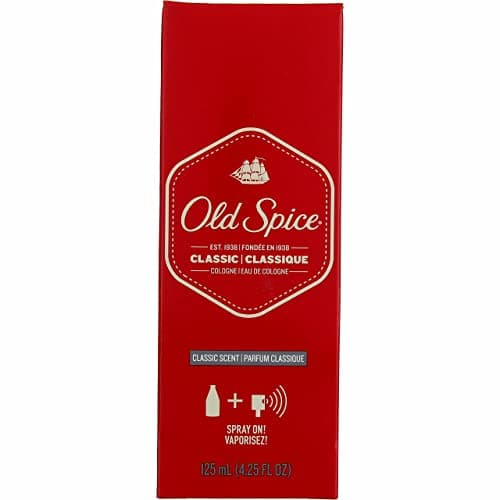
Old Spice is the most recognizable men's fragrance in America and almost nobody reviews it seriously. That is a mistake. Stripped of the nostalgia, the deodorant aisle and the advertising, the Classic scent is a properly constructed spicy oriental that would be praised if it arrived today under a name nobody recognized.
It was created by Albert Hauck for the Shulton Company, launched in 1937 and issued the following year. It has outlived Shulton, changed corporate hands more than once, and is now a Procter & Gamble brand. The classic scent is still sold, and it is not the same thing as the body sprays that carry the modern branding.
The notes
The composition opens on orange, lemon, nutmeg, clove, star anise, clary sage and aldehydes. The heart is cinnamon, carnation, geranium, jasmine, heliotrope and pimento berry. The base brings vanilla, cedar, frankincense, styrax, coumarin, oakmoss and amber. That is a genuinely dense list — more materials than most modern designer pyramids declare.
What you actually smell is a warm, powdery spice: clove and cinnamon over a sweet vanilla-amber base, with a citrus-aldehyde brightness on top that fades quickly. It is the archetype of what people mean by "barbershop." If the vocabulary is unfamiliar, our fragrance families guide places this squarely in the spicy-oriental camp.
One honest caveat: a fragrance in production since the 1930s has been reformulated repeatedly, both for cost and for regulatory reasons — nitro musks and oakmoss at 1930s levels are not permitted today. Vintage bottles smell richer than current production. That is widely reported by collectors and is not something we can measure, but it is a real difference and worth knowing before you chase a memory.
Cologne vs aftershave vs body spray
This trips up almost every buyer. Old Spice Classic exists as a cologne (the fragrance product), an aftershave splash (lower concentration, more alcohol, intended for post-shave skin) and a range of body sprays (a different, modern scent family entirely). They are not interchangeable. The aftershave is the cheapest and the most commonly bought by accident; it smells related but weaker and sharper. We unpack the general distinction in cologne vs aftershave.
On Amazon, the listing that reliably names itself as the cologne spray is a four-pack. Single bottles appear and disappear from listings under ambiguous titles, so check the product description before ordering if you specifically want one bottle of the cologne.
Performance
Modest, and that is the honest headline. This is a low-concentration product in the eau de cologne tradition: two to three hours of clear wear, then a faint powdery trace. Spray generously — the format is designed for it and the bottle costs almost nothing. Do not expect it to survive a working day, and do not compare it on that axis to an eau de parfum. Our concentrations guide explains why that gap is structural rather than a quality failure.
Who it's for, who should skip it
Buy it if you like classic spicy scents, if you want something cheap for the bathroom shelf, or if you genuinely enjoy the association — a lot of people wear it because it smells like their grandfather, and that is a perfectly good reason to buy a fragrance. It is also an easy, non-precious way to try a spicy-oriental profile before spending real money on one.
Skip it if you want performance, if you want to smell contemporary, or if the generational reading bothers you. It will be recognized, and it will be placed. There is no version of wearing Old Spice Classic where nobody notices what it is.
If you like the profile but want more from it, the modern spicy bottles on best winter colognes cover the same warm-spice territory with the longevity Old Spice cannot deliver, and Lattafa Khamrah is the cheap route to that upgrade.
If what you actually like about Old Spice is the format rather than the spice — a very old formula sold cheaply at eau de cologne strength, meant to be splashed on rather than rationed — then its closest relative on this site is 4711 Original Eau de Cologne, which has been made to the same seven-ingredient recipe since 1792. It is citrus and herbs instead of spice, and it fades just as fast.
And if you want the barbershop feeling without the clove and cinnamon, Brut Classic is the lavender-and-anise fougere from the same drugstore aisle - just as cheap, just as recognizable, and similarly short-lived.