Eau de parfum contains roughly 15 to 20 percent fragrance oil. Eau de cologne contains roughly 2 to 4 percent. An EDP is therefore something like four or five times more concentrated, which makes this the largest practical gap on the concentration scale - and the one where "stronger" most often turns into "too much."
If you want the short answer: buy an EDP if you want one application to last a day and you are disciplined about spray count. Buy a cologne-strength product if you want something light for heat or for a scent-sensitive workplace. For most people most of the time, the eau de toilette in between is the sensible middle - see cologne vs eau de toilette.
What you actually get for the extra oil
Three things change, and only one of them is obvious.
Longevity. The big one. A cologne-strength product gives you two to three hours of clear wear; an EDP commonly gives eight or more, and some cling to clothing for days. That is the reason the top of our longest-lasting roundup is almost entirely eau de parfum.
Projection. More oil in the air means the scent carries further. This is an asset outdoors and a liability at a desk or a dinner table, and it is the main reason our office roundup skews toward lighter concentrations.
Character. This one surprises people. Houses generally do not simply add more oil when they make an EDP version of a fragrance - they reformulate, and the usual direction is warmer, sweeter and heavier. An EDP is often a different fragrance wearing the same name, not a louder copy of the EDT. If you loved the lighter version, sample the stronger one before buying it.
When stronger is worse
There are three situations where a lighter concentration is genuinely the better purchase, and they cover a lot of ordinary life. In heat, warmth amplifies projection - a fragrance that is pleasant in November can be overwhelming in July at the same spray count. In shared indoor spaces, an EDP built on amber and vanilla can be genuinely disruptive; plenty of workplaces have informal scent norms and a few have formal ones. And for anyone new to fragrance, a light concentration is much more forgiving - you cannot easily ruin a room with a 3 percent cologne, and you very much can with a 20 percent EDP.
The label is a hint, not a guarantee
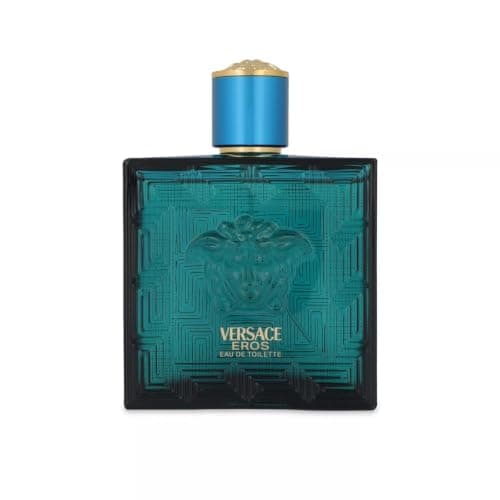
These percentage ranges are industry conventions rather than regulated standards. No law requires a bottle marked EDP to contain a specific amount of oil, and the ranges overlap in practice. This is why a well-constructed EDT such as Versace Eros or Dior Sauvage can genuinely outperform a thin EDP - the materials in the base matter as much as the headline percentage. Our notes guide explains why base composition drives longevity.
Price
An EDP usually costs more than the EDT of the same fragrance, sometimes substantially. Whether that is good value depends on how you wear it - because an EDP needs fewer sprays, a bottle can last considerably longer, so the cost per wear is often closer than the shelf price suggests. What moves price far more than concentration is brand: clone-house eau de parfums in our dupes roundup routinely cost less than designer eau de toilettes while outperforming them on wear time.
How to apply an eau de parfum
One or two sprays, on the chest, and wait twenty minutes before deciding it is not enough - EDPs bloom with body heat and frequently get stronger in the first half hour rather than weaker. Avoid the neck if you are going somewhere enclosed, and spray onto clothing sparingly, because fabric holds these concentrations for days. The application guide has the full method.
Which one for which situation
Work: cologne or EDT, applied lightly. Summer daytime: cologne or EDT. Winter evenings and dates: EDP - see the date-night roundup. A single bottle to cover everything: EDT, which is why most of our general picks sit there. Maximum value per wear: a clone-house EDP, because you get the highest concentration at the lowest price.
Where this sits on the full scale
Cologne, eau de toilette, eau de parfum and parfum (or extrait) are the four rungs, in ascending order of oil content. Our full concentrations guide has the complete table with typical percentages and wear times, and cologne vs perfume handles the everyday-language confusion around the word "perfume."