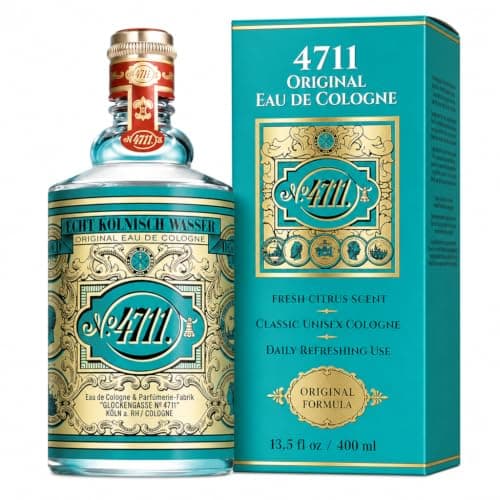
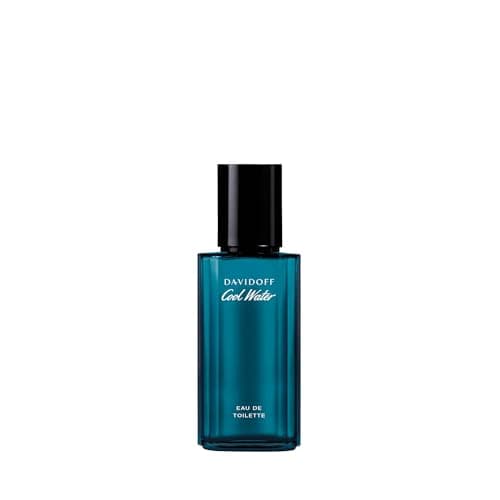
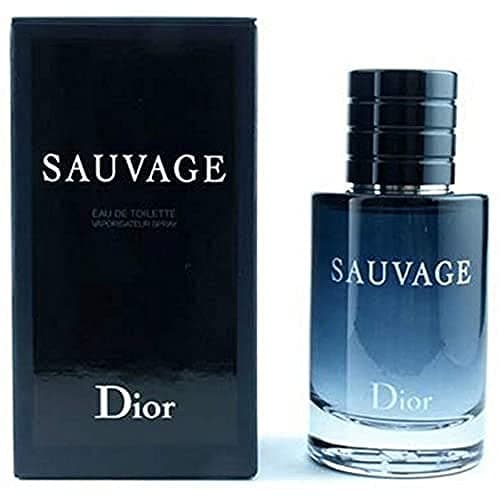
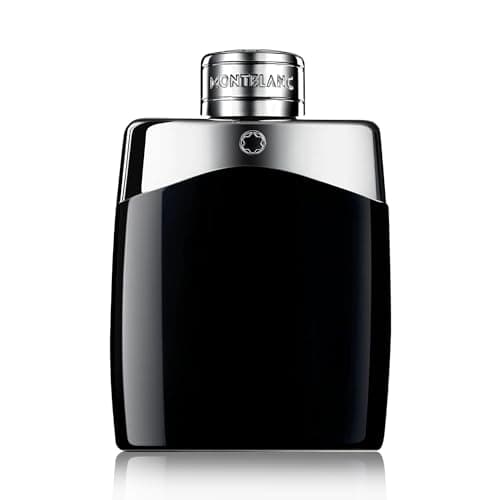
Yes— but one spray, on your chest, roughly ninety minutes before you walk in. And the bottle you pick for an interview should not automatically be your favorite bottle, because this is the one occasion where a fragrance performing well is a liability rather than a feature. If you want the short answer and nothing else: Montblanc Legend, one spray, and stop thinking about it.
Almost every page written about this treats it as a grooming question, in the same breath as ironing a shirt. It is not. It is a risk calculation, and the numbers that drive it are not about fragrance at all — they are about how many people react badly to fragranced products in a shared room. Once you know those numbers the rule follows on its own, and so does the kind of bottle that fits it.
Why this is a risk question, not a style question
Anne Steinemann surveyed a nationally representative sample of 1,136 US adults for Air Quality, Atmosphere & Health and found that 34.7% reported health problems— migraines, breathing difficulty and similar — from exposure to fragranced products, and that more than half would prefer workplaces, health care settings, hotels and airplanes to be fragrance-free. A second figure from the same body of work is the one that matters most here: 15.1% of Americans report losing workdays or a job in the previous year because of fragranced-product exposure at work.
Read that as a probability rather than a scandal. You are about to spend between thirty and forty-five minutes in a closed room with one to four strangers, seated two to four feet away, and you have no way of knowing whether any of them is in that third of the population. You also cannot tell whether the company runs a fragrance-free policy, whether the room has a window, or whether the person opposite you spent the morning with a headache. Every one of those unknowns points the same way: the cost of being noticed is high and the benefit is close to zero. Nobody has ever been hired because of their cologne.
That is also the argument against the other common answer, which is to wear nothing at all. Smelling of clean skin and laundry is a perfectly good outcome, and if you own one bottle and it is a loud one, wearing nothing is the right call. But a single spray of something quiet sits comfortably inside the risk budget, and it does one useful thing: it removes the chance that you arrive smelling of a bus, of a cigarette somebody else smoked on the way in, or of your own nerves. If you are the one who reacts to fragrance, our guide to cologne allergies and sensitivities is the honest place to start instead.
The brief: an interview is not a workday
This is where almost every "best cologne for a job interview" list goes wrong. They recommend office fragrances, and an office is a completely different problem. An office is eight hours of shared air at a desk, so the brief there is endurance without accumulation— something that survives until five without getting louder. We cover that separately in the best colognes for the office roundup, and its winner is not automatically the right answer here.
An interview is the opposite shape. It is short, it is close, it is seated, and the air is still. What you need is not performance but a small detection radius— the distance at which somebody notices you are wearing something. For an interview the target is the length of a handshake. At arm's length you should read as clean. Across a table, ideally nothing at all. The person interviewing you should finish the conversation without having formed any opinion about your fragrance, because having formed one is already a worse outcome than having formed none.
That reframing changes which qualities count. Longevity is irrelevant — you need ninety minutes, not nine hours, and most of a fragrance's stated longevity is spent after you have left the building. Projection is a negative. Sillage is a negative. Distinctiveness is a negative. Those are four of the five things fragrance pages usually score, which is why a page built for this question has to score something else — and it is why Dior Sauvage, a genuinely excellent fragrance and the most recommended bottle on the internet, finishes last here.
What to look for
Four properties, in order of how much they matter. Together they describe a narrower set of bottles than you would expect, and most people already own one of them.
- Low concentration, by preference. An eau de toilette or a true eau de cologne puts less oil on your skin than an eau de parfum, so the same single spray travels less far. Our fragrance concentrations guide has the full scale; the short version for today is EDC and EDT yes, EDP only if you trust yourself with one spray, extrait no.
- No sweetness and no resin.Vanilla, tonka at high dose, praline, dates, amber accords and oud all share one behavior — they bloom in warm, still air and they cling to fabric. A seated meeting in a small room is precisely the condition that makes them grow. Fresh, citrus, aromatic and fougere structures do the opposite: they fade inward.
- Familiar rather than interesting.This is the one that reads as bad advice and is not. A fragrance that smells like "clean" gets processed and forgotten. A fragrance that smells like something specific — leather, incense, tobacco, a gourmand — invites a judgment, and in a thirty-minute assessment of your suitability you do not want to supply extra material. Save the interesting bottle for the offer dinner.
- A nozzle you can control.A fine atomizer lets you place one spray exactly where you want it. A splash bottle with no pump, which is how most true eau de cologne is sold, means you either decant it or tip a palmful out — workable, but you need to know that before the morning of.
Everything below is scored against those four, plus value. Nothing is scored on longevity or projection. The scores are judgments from documented research, in the sense set out on how we review— not measurements we took.
The application protocol
The bottle matters less than the dose, and the dose matters less than the timing. Do these four things in order and no realistic fragrance choice can embarrass you.
- One spray. Not two.On the chest or the sternum, under your shirt. Fabric and body heat diffuse it slowly and the shirt acts as a moderator. Avoid the neck and the wrists — both sit at conversational height, and the wrists move while you talk.
- Apply ninety minutes before, not on arrival. The first fifteen minutes of any fragrance are its loudest and least representative; the top notes are alcohol-driven and they are the part that fills a room. By the time you are shaking hands you want to be into the heart, which is quieter and closer to the skin.
- Never in the car. A sealed car concentrates the spray and then re-deposits it on everything you are wearing, which is the single most common way people arrive wearing three times what they intended. Spray at home and drive with a window cracked.
- Do not reapply.Not in the lobby, not in the bathroom. You will have stopped smelling your own fragrance within about twenty minutes — olfactory fatigue is a property of your nose, not of the bottle, and it is covered properly in why you cannot smell your own cologne. Everybody else can still smell it perfectly well.
If you have already over-applied and you are twenty minutes out: do not add water and do not rub it, because both spread it. Wipe the applied area once with an unscented wipe or a damp paper towel, take the jacket off and leave it in the car if the fragrance landed on the jacket, and give it air. Our how to apply cologne guide covers dose and placement in full, and sillage and projection explained sets out why the two are not the same thing and why only one of them is your problem today.
When the answer is actually no
There are four cases where the right amount is zero, and they are worth checking before you pick a bottle at all.
- Health care, laboratory and clinical settings. Many hospitals and clinics operate explicit fragrance-free policies for patient safety. Arriving scented there is not a faux pas, it is a policy breach, and it is the one case where it can genuinely count against you.
- Food, kitchens and anything sensory. Fragrance competes with the product. In a kitchen trial or a tasting room it is a professional error, not a style choice.
- A panel in a small room. Four people at close range for an hour multiplies the odds that somebody present is in that 34.7%. If the format is a panel, consider skipping it.
- You own one bottle and it is a loud one. If your only fragrance is a sweet gourmand, a dense amber or an oud, wear nothing. A single spray of the wrong structure still blooms. There is no version of this where a strong fragrance helps you.
In every other case — an ordinary office, a site visit, a video call where it makes no difference at all — one spray of something quiet is a perfectly reasonable thing to do, and it is what we would do. The honest summary is that this decision has a small upside and a manageable downside, and the entire skill is in keeping the downside small.