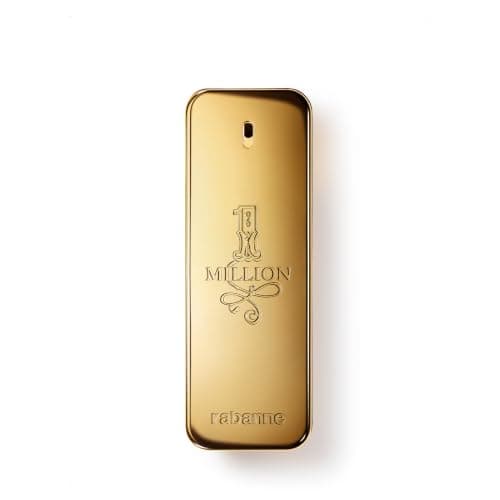
It is difficult to overstate how much 1 Million changed men's fragrance. Released in August 2008 and created by Christophe Raynaud, Olivier Pescheux and Michel Girard, it took the designer shelf — which at that point was still dominated by fresh aquatics descended from Cool Water— and replaced it with something loud, warm, spicy and sweet. Almost everything on the mainstream men's shelf for the following decade was a response to it.
That makes it genuinely important, and it also creates the problem this review has to address. A fragrance that dominates an era ends up sounding like that era, and 1 Million now carries an unmistakable set of associations with it. Whether that matters to you is the whole question.
The notes
The published pyramid is blood mandarin, grapefruit and mint up top; cinnamon, spicy notes and rose in the heart; and amber, leather, woody notes and Indian patchouli in the base. It is classed as woody spicy, although in wear it reads much sweeter than that suggests.
The opening is bright and almost fizzy — mint and citrus — but it does not last long. What defines the fragrance is the transition into cinnamon and a sweet, slightly powdery rose, and then into the leather-amber base that gives it its signature warmth. The overall effect is confident and heavy-handed in a way that was genuinely novel in 2008 and is now thoroughly familiar, because dozens of bottles followed the same template.
Performance
Compiled from published specs and consistent wearer reports rather than lab testing: 1 Million projects hard and lasts well. It is one of the loudest eau de toilettes on the mainstream shelf, and the amber-leather base keeps working long after the citrus opening has gone. That performance is a large part of why it became a phenomenon — people buying their first designer bottle could tell it was doing something.
It is also the single easiest fragrance on this site to over-apply. Two sprays is the ceiling in most settings and one is often correct. The reputation this scent has for being obnoxious is almost entirely a reputation about how it gets worn rather than about the composition itself.
Does it still work today?
For its actual job, yes. If you want a warm, loud, unmistakably attention-seeking scent for a night out in cold weather, this is still very good at that, and it has the advantage of being universally recognized — nobody will think you smell strange. Our all-time roundup includes it on influence grounds and rates it fairly.
What has changed is the context. In 2008 this was new; in 2026 it is a period signature, and for anyone who was going out in that period it will land as a specific memory rather than as a neutral scent. That is not fatal — plenty of classics carry associations and are worn happily anyway — but you should choose it knowingly rather than assuming it is a blank slate. Our over-40 roundup deals with that distinction at length.
Is it worth it?
At full designer price, only if you specifically want this scent. The spicy-sweet lane it created is now the most heavily served category in fragrance, and a great deal of it costs far less — the bottles in our under-$50 roundup and dupes roundup cover similar ground for a fraction of the money, and several out-perform it on longevity.
What you are paying for is the original rather than an interpretation, plus a bottle that is genuinely iconic industrial design. If that matters to you, it is a fair price. If you just want a warm, sweet night-out scent and do not care about the provenance, you can do the same job for considerably less. And if the house's fresh blockbuster is the other bottle on your shortlist, see Invictus vs 1 Million.