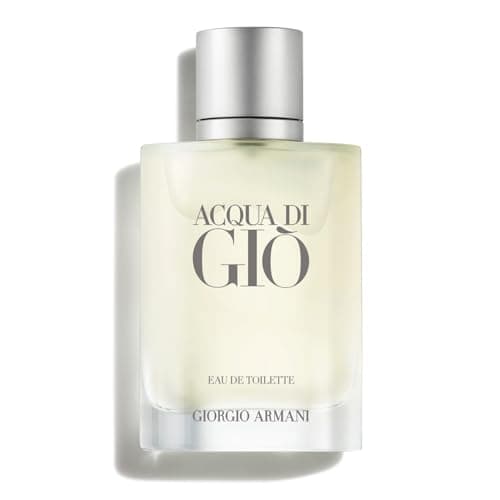
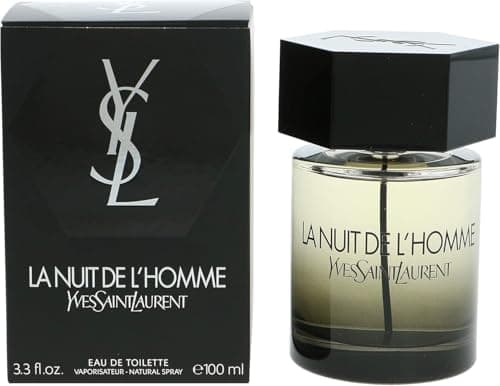
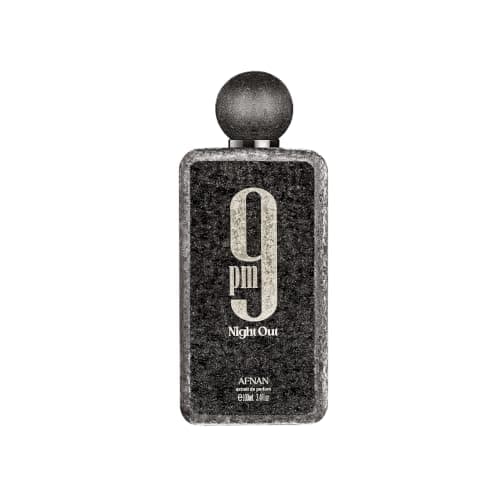
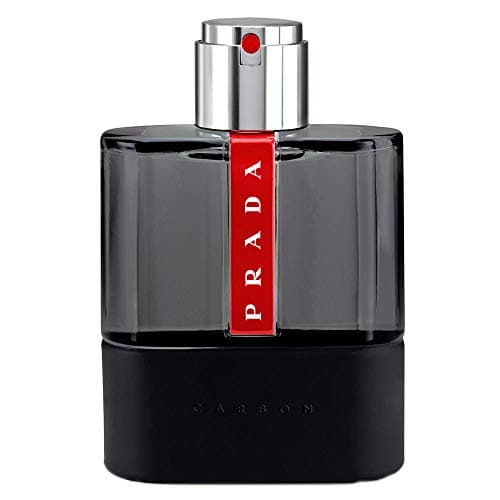
A day cologne is light, clean and close-wearing enough for warm air and shared spaces; a night cologne leans on denser, warmer or sweeter base notes that need cooler air and closer company to read well. The clock has very little to do with it — the setting, the temperature and how far the scent reaches decide which one you need.
That matters because "day" and "night" are labels people use as if they were fixed properties of a bottle. They are not. A quiet evening scent can be perfectly right at a winter lunch, and a big, bright fresh fragrance can be the wrong choice for a 9am meeting. This guide sets out the five things that actually move a fragrance from one column to the other, a test you can run on anything you own, and two picks for each side.
The five things that make a scent day or night
1. How dense the base is
Every fragrance ends in its base notes, and the base is what you wear for most of the day. Heavy, slow-evaporating materials — vanilla, tonka, amber, resins, leather, oud and the richer woods — stay on skin for hours and give a fragrance weight. Light materials such as citrus and marine notes evaporate fast and leave a clean, thin trail. Our fragrance notes guide covers how the pyramid works; for this question, the base is almost the whole answer. A fragrance that dries down to musk, clean woods or ambroxan leans day. One that dries down to amber, vanilla or resin leans night.
2. How sweet it is
Sweetness reads as warmth and intimacy, and it is the single biggest reason people file a scent under evening. It is also the property that behaves worst in heat: sweet amber and gourmand accords that feel rich in cold air turn syrupy when the temperature climbs, a pattern our reviews of bottles such as Azzaro The Most Wanted and Le Male both flag. Sweetness is not wrong in daylight, but it is the first thing to dial down when the day is warm or the room is shared.
3. How far it reaches
Projection is how far a fragrance travels from you; sillage is the trail it leaves behind. Our sillage and projection guide explains the difference. For day vs night, the useful framing is about consent. In daytime settings — an office, a commute, a meeting room — the people around you did not choose to be near you, so a scent should stay in your own space. In the evening you are more often with people you chose to be close to, and a fragrance can afford to reach a little further. That is why our office roundup ranks on restraint first.
4. Concentration
The label on the bottle tells you how much perfume oil is in it. By the standard industry bands an eau de toilette carries roughly 5-15% and an eau de parfum roughly 15-20%, and more oil generally means a denser, longer-lasting scent. That is why EDTs are the traditional daytime, warm-weather choice and EDPs the default for evenings, as our fragrance concentrations guide sets out. But concentration is not destiny: a well-built eau de toilette can outlast a thin eau de parfum, and a light EDP can be more daytime-friendly than a heavy EDT. Treat it as one input, not the verdict.
5. Temperature and setting
Heat speeds up evaporation. The same two sprays that read polished on a cold evening lift off warm skin faster and project further on a hot afternoon, then fade sooner. Cold does the opposite: it slows evaporation, keeps a scent closer to the body and can stretch how long it lasts. Humidity pushes projection up further. Daytime is usually the warmer, more crowded half of the day, which is most of the reason fresh scents own it — and why a summer evening outdoors can call for a daytime scent, while a cold winter lunch can carry an evening one.
A two-question test for any bottle
You do not need a fragrance database to sort your own shelf. Wear the scent on an ordinary day and answer two questions.
- What is left at hour three? Ignore the opening; it is largely gone within the first hour. If what remains is clean — musk, lavender, citrus residue, crisp woods, mineral or marine — the bottle leans day. If it is warm — amber, vanilla, tonka, resin, toffee, warm spice or dark woods — it leans night.
- How far does it reach at hour one? Ask someone who does not live with you whether they can smell it at arm's length and whether they can smell it from across the room. Do not trust your own nose here; you stop registering your own fragrance within minutes, which is covered in why you cannot smell your own cologne.
Put the two answers together and every bottle lands in one of four places:
- Clean and close: the classic day scent. Safe at a desk, in heat, on a crowded train. Acqua di Gio is the reference.
- Clean but far-reaching: a daytime statement. Fine outdoors and at weekends, too much at a shared desk — the reason Dior Sauvage finishes last in our office roundup despite being fresh.
- Warm and close: the intimate night scent. Built for dinners and dates, where the people who matter are within a couple of feet. La Nuit de L'Homme is the reference.
- Warm and far-reaching: the night-out statement. Bars, parties, cold-weather evenings. Azzaro The Most Wanted is the loud reference, and it is the one quadrant that genuinely does not work at 9am.
The four picks below come two from each side — day first, then night — chosen to show the range within each rather than to crown a single winner. If the job is specifically a date, our date-night roundup ranks for that one setting.
The four picks side by side
What each pick leaves behind, how far it reaches, and the dose our individual reviews recommend. Performance is compiled from published concentrations and aggregated wearer reports, not from any measurement of ours.
| Pick | Side | Left at hour three | Reach | Sensible dose |
|---|
| Prada Luna Rossa Carbon | Day (stretches to night) | Lavender, mineral, ambroxan | Close after the first hour | Up to 4-5 sprays |
| Giorgio Armani Acqua di Gio | Day | Soft woods and musk | Modest, close within an hour or two | 2-3 sprays |
| YSL La Nuit de L'Homme | Night (crosses to cool days) | Cardamom, cedar, vetiver | Intimate throughout | 3-4 sprays |
| Afnan 9PM | Night | Vanilla, tonka, amber | Moderate-to-strong early, then close | Up to 3 sprays |
Can one bottle do both?
Often, yes — within limits, and the limits are predictable. The lever is application: how many sprays, and where. Fewer sprays and a covered placement make any fragrance behave more like a day scent; more sprays at the neck make it reach further. Our sillage and projection guide covers placement in detail — neck and behind the ears project most, the chest under a shirt releases more slowly and reaches less far — and how to apply cologne covers technique.
What application cannot change is character. You can make a sweet amber quieter, but one spray of it still smells sweet to the person next to you, and in a warm office that is the problem, not the volume. So the direction of stretch matters. A clean, versatile day scent stretches to evening well: add a spray or two and it simply reads as a well-groomed person at dinner. A heavy, sweet night scent shrinks to daytime badly. That is why the best one-bottle candidates sit on the clean side with a little warmth in the base — Luna Rossa Carbon on this page, which our review describes as hard to wear wrong at any hour — rather than on the sweet side.
The one night scent that crosses back comfortably is the quiet one. La Nuit de L'Homme has no heavy sweetness and barely projects, so at two or three sprays on a cold day it is perfectly civilized at lunch. The Most Wanted or 9PM at noon in July is a different story.
Where day vs night advice goes wrong
- Treating "night" as "loud." The best evening scents on this site are frequently the quietest. Night is about warmth and intimacy; volume is a separate choice.
- Forgetting that summer nights are warm. An outdoor dinner in July behaves like midday for evaporation. A dense amber that works on a December evening can be overwhelming on a hot patio, and a fresh scent is often the better night choice in summer.
- Making the office the exception. For most men the real "day" test is a shared desk in a heated or air-conditioned room for eight hours. If a scent passes there, it passes everywhere else in daylight.
- Spraying more at night because you cannot smell it. Evening scents are often denser, and dense bases are exactly the ones your nose stops registering fastest. Decide the spray count before you leave, and stick to it.
Building a simple day-and-night rotation
If you want two bottles rather than one, pick them from opposite quadrants of the test: one clean-and-close for daytime and one warm scent for evenings, choosing close or far-reaching depending on whether your evenings are dinners or nights out. That pair covers far more of life than two bottles from the same corner. Our fragrance wardrobe guide builds out the same idea, the office and date-night roundups rank the best candidates for each end, and if warm spice is the evening direction you like, our spicy cologne roundup sorts the cool spices from the warm ones. And if the day itself is the challenge, our guide to smelling good all day covers keeping a daytime scent going from morning to evening.