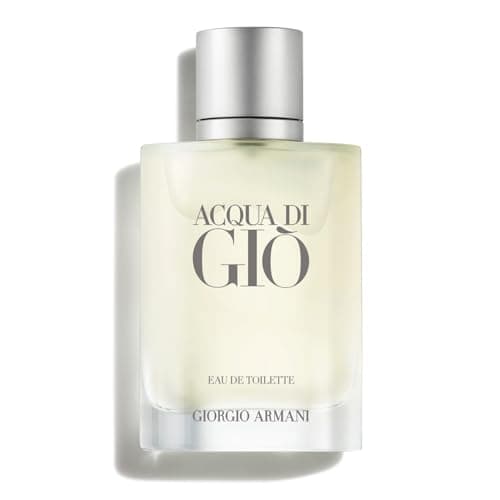
Acqua di Gio is the safest good decision in men's fragrance. It is clean, bright, universally liked and appropriate literally anywhere - office, wedding, beach, first date, funeral. Nearly thirty years after it launched it is still the reference point for the entire fresh-aquatic category, and it is still very good. What it is not, any more, is powerful or surprising.
Short version: buy it if you want one bottle that works everywhere and you would rather be pleasant than memorable. Skip it if you want projection, if you want individuality, or if you are chasing the version you remember from 1998.
The notes
Alberto Morillas and Annick Menardo built it in 1996 around one then-new idea: calone, the synthetic material that made a "sea" note possible. The published pyramid is unusually long - lime, lemon, bergamot, jasmine, orange and neroli up top; marine notes with rosemary, coriander, freesia, cyclamen, violet, peach and nutmeg in the heart; white musk, cedar, oakmoss, patchouli and amber underneath.
What you actually smell is far simpler than that list implies: bright citrus, then salt and clean air, then a soft woody-musky finish. The genius of it is restraint. There is no sweetness, no spice, nothing demanding attention - it reads like clean skin on a warm day, which is why nobody has ever objected to it.
Performance
This is the honest weak point. Going by the EDT concentration plus the consistent community consensus - not any lab test of ours - expect around five to six hours of clear wear and modest projection, settling close to the skin after the first hour or two. In real heat it fades faster still. Two or three sprays is reasonable here, which is unusual for this site; this is not a fragrance you can over-apply into a problem.
If longevity is your priority, Armani's own flankers - the Profumo, the Eau de Parfum, the Parfum - all push harder than the original EDT, and our longest-lasting roundup covers stronger options generally. There is also a lot you can do with application: see how to make cologne last longer.
The reformulation question
Long-time wearers consistently report that Acqua di Gio is quieter and thinner than it used to be, and they are broadly right. Ingredient regulations have restricted materials across the industry - oakmoss most notably - and nearly every classic from this era has been reworked more than once as a result. The practical effect is a cleaner, softer, less textured version of the same idea.
Two honest points about that. First, it is a real difference, not just nostalgia. Second, it does not make the current bottle bad - if you have never smelled the 1990s version, what you buy today is still an excellent, extremely wearable fragrance. Buy it for what it is now rather than for what someone on a forum remembers.
Who it is for, who should skip it
It is for the person who wants one bottle. If you own a single fragrance and it has to work at your desk, at dinner and at a wedding in July, this is very close to the correct answer - which is why it scores a 10 on versatility and appears in both our summer roundup and our all-time list.
Skip it if you want to be noticed. This is a fragrance that flatters rather than announces, and people who want compliments usually end up reaching for something sweeter and louder like Versace Eros. Skip it too if the ubiquity bothers you - it has been a global best-seller for three decades, so you will smell it on other people regularly.
Which version to buy
Armani has built a large family around this and the differences are real rather than cosmetic. The original Eau de Toilette is the lightest, the most versatile and the one reviewed here. Profumo is the darkest of the line - incense and patchouli turn the marine idea into something smoky and evening-appropriate, and a lot of people who find the EDT thin prefer it. The Eau de Parfum and Parfum sit between the two, richer and longer-lasting than the original without going as dark as Profumo. Profondo is deeper and more mineral again.
If longevity is the thing frustrating you about the EDT, one of the stronger versions is a more sensible answer than spraying more of the light one - our cologne vs eau de parfum guide explains why the stronger versions are usually reformulations rather than simple concentrations, and why sampling first matters.
And if what you actually want is this smell for a fraction of the money, that is a separate question with a surprisingly precise answer. The Amazon catalog contains a clone whose published note list is this bottle's note list, note for note. We rank the whole field in best Acqua di Gio dupes, including which of the seventeen bottles called Acqua di Gio each clone is really copying.
How to wear it
Two or three sprays, which is more generous than we recommend for almost anything else on this site - Acqua di Gio is quiet enough that over-application is genuinely difficult. Chest and neck both work. It is at its best in daytime and warm weather, where the marine freshness reads as clean rather than thin, and it is one of the few fragrances we would wear to a hot, crowded room without worrying about anyone else. Expect to top up in the afternoon if you want it detectable into the evening; moisturized skin makes a noticeable difference here.
Is it worth it?
Yes, with clear eyes. You are paying designer money for versatility rather than for power or originality, and versatility is genuinely worth paying for if you only own one or two bottles. If your budget is tight, Nautica Voyage occupies the same fresh lane for a fraction of the price with less refinement, and our under-$50 roundup has more. If you already own a fresh aquatic and want something with more character, this is not the upgrade - it is the baseline everything else is measured against. If you are choosing between it and the older aquatic that came before it, our Acqua di Gio vs Cool Water comparison gives a straight answer for each situation.
Worth knowing before you pay the premium: the bottle most often set against this one was composed by the same perfumer twenty years later, and the commonly sold sizes mean it costs in the region of a fifth as much per ounce. We work that through in Acqua di Gio vs Dylan Blue.