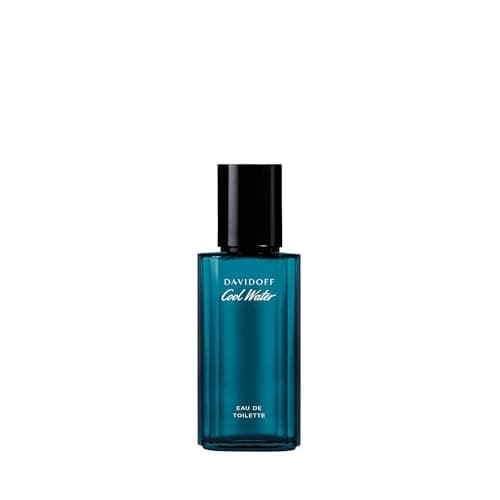
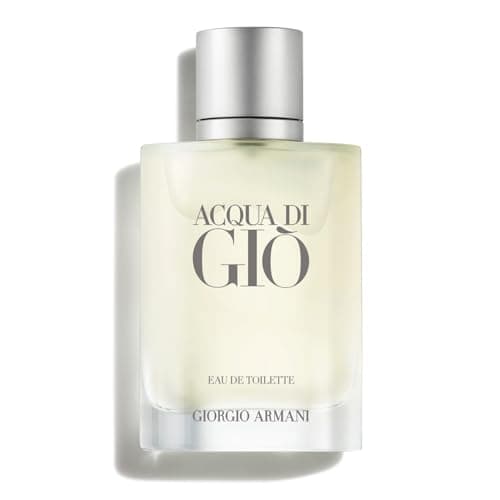
Buy Acqua di Gio if you want the better fragrance and one bottle that works everywhere. Buy Cool Water if value per ounce matters more than polish, you mostly need something for hot weather, and you are young enough that its nineties association means nothing to you. For most people choosing between the two for the first time, Acqua di Gio is the answer.
These two get compared because they are the founding documents of the fresh aquatic. Pierre Bourdon's Cool Water arrived in 1988 and made a cologne smell like cold sea air; Alberto Morillas and Annick Menardo's Acqua di Gio followed in 1996 and turned the same idea into the clean citrus-marine template that most fresh scents still follow. Both lean on calone for their sea note, both are eaux de toilette, and both have been reworked since the versions people remember. Beyond that, they wear quite differently.
The straight answer, situation by situation
Office: Acqua di Gio. Its restraint is an asset at a desk — no sweetness, nothing sharp, nothing a colleague will object to. Cool Water is perfectly polite too, but its bracing minty opening is the strongest phase of its day and it lands just as you walk in. Our office roundup covers the wider field.
Heat: Close on smell, Cool Water on practicality. Both were built for warm weather and both fade faster in real heat. The difference is that re-spraying Cool Water at lunch costs next to nothing, while doing the same with Acqua di Gio burns through a small, expensive bottle. Both appear in our summer roundup.
Value per wear: Cool Water, on paper. The bottle is bigger and the price per ounce is a fraction of Acqua di Gio's. Acqua di Gio claws some of that back by lasting a little longer per application and by being wearable on more days, but not enough to close the gap for a warm-weather second bottle.
Compliments: Neither is a compliment machine. Both are clean scents that earn "you smell nice" more often than "what are you wearing?" In our judgment Acqua di Gio's brighter, more polished profile is the one more likely to be read as expensive. If compliments are the whole brief, something sweeter like Versace Eros does that job better than either.
Older versus younger wearer: This is where Cool Water's age shows. People who were around in the late eighties and nineties tend to place it instantly, and place the wearer with it. To a younger nose it is simply a cheap, clean fresh scent, and a good one. Acqua di Gio is also a nineties release, but it has aged into a neutral classic rather than a period piece. Our colognes for men over 40 roundup deals with that nostalgia-bottle problem in detail.
One bottle only: Acqua di Gio, without much hesitation. It scores a 10 for versatility in our review for a reason, and it is the reference point our fresh cologne roundup measures everything else against.
How they actually smell
Acqua di Gio has an unusually long published pyramid: lime, lemon, bergamot, jasmine, orange and neroli up top; marine notes with rosemary, coriander, freesia, cyclamen, violet, peach and nutmeg in the heart; white musk, cedar, oakmoss, patchouli and amber underneath. What you actually smell is simpler — bright citrus, then salt and clean air, then a soft woody-musky finish. There is no sweetness and no spice. It reads like clean skin on a warm day.
Cool Water lists sea water, lavender, mint, green notes, rosemary, calone and coriander up top; sandalwood, neroli, geranium and jasmine in the heart; and musk, oakmoss, cedar, tobacco and ambergris in the base. On skin that is a bracing minty-marine opening, a soft aromatic middle and a clean musky-woody dry-down. Dihydromyrcenol adds a crisp, slightly metallic freshness that reads almost like laundry.
The practical difference: Acqua di Gio is led by citrus, Cool Water by herbs. Acqua di Gio smells warmer and more rounded; Cool Water smells colder, greener and more aromatic, with the mint and lavender giving it a classic grooming-product idea of "fresh." They share a sea note, but side by side nobody would mistake one for the other.
Performance: neither is a powerhouse
Compiled from the published concentration and consistent wearer reports rather than any testing of ours: Acqua di Gio typically gives around five to six hours of clear wear with modest projection, settling close to the skin after the first hour or two. Cool Water gives a few hours of real presence and then a soft skin scent, with the opening by far its strongest phase. Both are widely reported as lighter than older bottles.
Acqua di Gio edges it, but the gap is small, and performance should not decide this one. If stamina is the priority, you are shopping in the wrong aisle — our longest-lasting roundup is the better place to look, and how to make cologne last longer covers what you can do with either bottle.
Side by side
| Acqua di Gio | Cool Water |
|---|
| Launched | 1996 | 1988 |
| Perfumer(s) | Alberto Morillas & Annick Menardo | Pierre Bourdon |
| Concentration | Eau de toilette | Eau de toilette |
| Character | Citrus-marine, clean, no sweetness | Mint-lavender-marine, cool and aromatic |
| Reported wear | Around five to six hours | A few hours, then a skin scent |
| Best setting | Anywhere, including the office | Warm weather, casual days |
| Reads as | Timeless | Distinctly of its era |
| Value | Designer pricing | Budget pricing, big bottle |
Does Cool Water date you?
For anyone who remembers its heyday, yes — and that is the single most useful thing to know before buying it. When a fragrance is copied for fifteen years it stops sounding original and starts sounding like the decade it dominated. That is a statement about association, not quality: the juice itself is clean, pleasant and competent.
Two situations where it does not matter. If you are young enough that the association means nothing, Cool Water is just an inexpensive fresh scent. And if you love it and wear it deliberately, a knowingly worn classic reads very differently from a default nobody re-examined in thirty years. Acqua di Gio has the opposite problem: it does not date you, but it is so common that it has become the definition of a safe choice.
Price and value
The listing we link for Acqua di Gio is the 1.6 oz bottle; Cool Water comes as a 4.2 oz bottle at budget pricing. Per ounce, the gap between them is wide, and live prices on the buttons above show exactly how wide today — we do not quote numbers in the text because they move.
How that plays out depends on the job. As your only bottle, Acqua di Gio wins on cost per useful occasion, because you will find more days you can wear it. As a warm-weather spare you spray freely and reapply at lunch, Cool Water is the smarter buy. And if the thing that bothers you about Acqua di Gio is that it fades, a stronger version from the same family — the Profumo, the Eau de Parfum or the Parfum — is a better answer than spraying more of the light one. Our cologne vs eau de parfum guide explains why those are closer to separate fragrances than stronger dilutions.
If neither is quite right
If both feel too expensive or too familiar, Nautica Voyage sits in the same fresh lane for less, with a green-apple twist, and it is a permanent fixture in our under-$50 roundup. If you like the aquatic idea but want more power and a darker, more modern base, Versace Dylan Blue is the obvious next step — our Dylan Blue vs Sauvage comparison covers where it fits. The full field is ranked in our best fresh colognes roundup.
The honest tiebreaker
Ask one question: is this going to be your only fragrance? If yes, buy Acqua di Gio — it is the more versatile, more current-smelling bottle, and it will not embarrass you anywhere. If it is a cheap summer spare to sit alongside something else, and the nineties association does not bother you, Cool Water is the better use of the money.
If you still cannot decide, wear each for a full day before committing. A sampler set or a department-store tester will settle it more reliably than any note list, because the thing that separates these two — citrus warmth versus minty cool — is something you notice in the first minute.