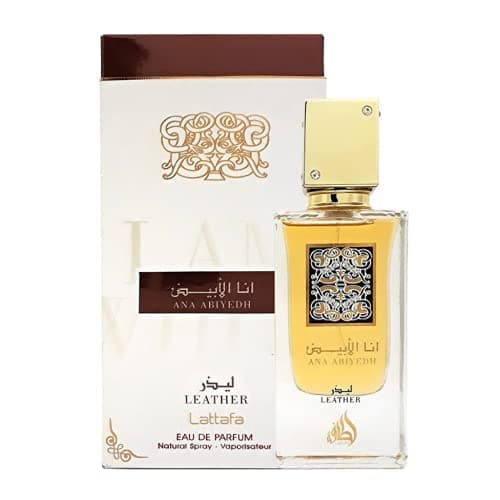
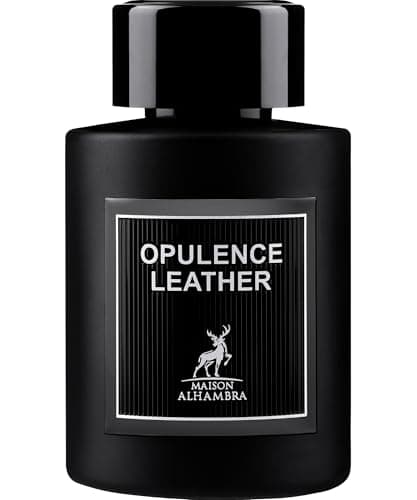
If you want one answer and nothing else: Maison Alhambra Opulence Leather. It is the cheapest fragrance here by a wide margin and it delivers a recognizable, legible leather, which is more than half the category manages at any price. If you want to understand why so many bottles labeled "leather" do not smell like leather, read the next four hundred words first — it is the part that actually saves you money.
Leather is the most mislabeled word in fragrance. Nothing in a bottle has ever been near a hide. What perfumers call leather is one of several completely different material sets, each of which produces a different smell, and brands use the single word "leather" for all of them. That is why one person describes a leather fragrance as smoky and tarry, another describes it as soft and powdery, and a third describes it as sweet and slightly medicinal — all three are right, about three different fragrances.
So this page does something a list cannot: it separates the techniques first, and then ranks six bottles by how legibly the leather reads rather than by how good the fragrance is overall. A great fragrance that only suggests leather scores lower here than a decent one where leather is the point, and we say so on every card.
The four kinds of "leather"
1. Birch tar — the smoky, tarry original.This is the historical answer and it is a real material: birch bark tar, made by dry distillation of birch bark. It has a direct connection to actual leather production. Russia leather, a major 17th- and 18th-century Russian export, was oiled with birch bark oil after tanning, which both waterproofed it and gave it what contemporaries called a distinctive and pleasant aroma; the oil also repelled insects. In the 18th century perfumers blended birch bark oil with civet and castoreum to scent Peau d'Espagne leather, and by the early 1900s it was a specialty perfumery material used as a base note for a "leathery, smoky note." Today it turns up mostly in leather and tobacco fragrances and in Cuir de Russie-style chypres. If a fragrance smells like a campfire, a new motorcycle jacket or a tarred rope, this is what you are smelling.
2. Isobutyl quinoline — the dry, bitter, green leather. A single synthetic that does most of the heavy lifting in classic leather perfumery. It is described as dry, leathery, warm, tobacco-like and ink-like, with animalic and woody nuances, and it is so strong and so diffusive that it is typically dosed at well under 1% of a formula. It blends with birch tar, castoreum bases, vetiver, patchouli and oakmoss, and it reached perfumery through the Mousse de Saxe base developed by De Laire in the late nineteenth century. This is the leather that smells austere and a little bitter — closer to a library and an old briefcase than to a jacket.
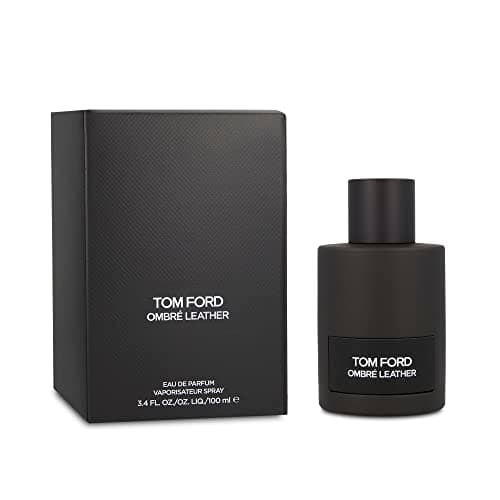
3. The modern saffron-and-suede accord. This is what almost every leather fragrance released in the last decade actually is, and it is a genuinely different smell: saffron, cardamom and jasmine over a soft suede-leather accord, on amber, patchouli and white moss. It is smooth, slightly sweet, slightly spicy and much more wearable than either of the two above, and it is the accord Tom Ford Ombre Leather standardized to the point that the entire value segment now builds against it. Three of the six picks below are in this lane.
4. "Leather" as a mood word.The fourth category is not a technique. It is a bottle where the word appears on the label and in the marketing, and the published pyramid is oud, rose and vanilla — a perfectly good Middle Eastern composition in which leather is an impression created by resin and wood rather than a material anybody dosed. We have one of those on the page, ranked last, named openly, because it is the single most common way people end up disappointed by a leather purchase.
How to tell which one you are buying
Read the base of the published pyramid and ignore the name on the front. The rules are mechanical.
- Amber, white moss and patchouli in the base, saffron or jasmine up top? The modern suede accord. Smooth, wearable, not smoky. This is the safe purchase and it is also the crowded one.
- Guaiac wood, tobacco or anything described as smoke? The smoky lane. Expect a definite tar or campfire edge and expect it to divide opinion in a shared room.
- Vetiver, oakmoss, birch or castoreum? The dry, austere, classic leather. Oldest, most interesting, least versatile, and the hardest to find under a hundred dollars.
- Oud, rose or vanilla with no leather material named anywhere except the title?The leather is a label. The fragrance may still be worth buying — just not for this reason.
One more practical warning before the picks. Leather is the one family where the cheap end genuinely struggles, and not because value houses cannot make good fragrance — they demonstrably can, as four years of our dupes coverage shows. It is because the materials that read as leather are either expensive naturals or powerful synthetics that are unforgiving when dosed badly. Under about fifteen dollars, what you usually get is sweet woody amber with the word leather on the box. The picks below all clear that bar, which is why there are six of them and not ten.
Everything is scored on five columns — leather clarity, build, wearability, longevity and value — with leather clarity weighted hardest, because a leather fragrance that does not read as leather has failed at the one job you bought it for. Value is scored against the live price on each card, not a list price. These are judgments from documented research in the sense set out on how we review, not measurements: we have no lab and we will not pretend otherwise.
What the money actually buys in this family
Leather behaves differently from the other fragrance families we rank. On a fresh roundup or a sweet one, the value houses compete on close to level terms, and we have said so repeatedly. Here they do not quite, and the reason is specific rather than snobbish: the materials that read convincingly as leather are either costly naturals or extremely powerful synthetics that punish imprecise dosing. Isobutyl quinoline is typically used at under one percent of a formula and will take over everything around it if over-dosed; birch tar reads as a bonfire the moment there is slightly too much of it. A house working to a tight cost per liter has two safe options, and both of them are what you find on the shelf: lean on the smooth modern suede accord, or use the word and build an amber.
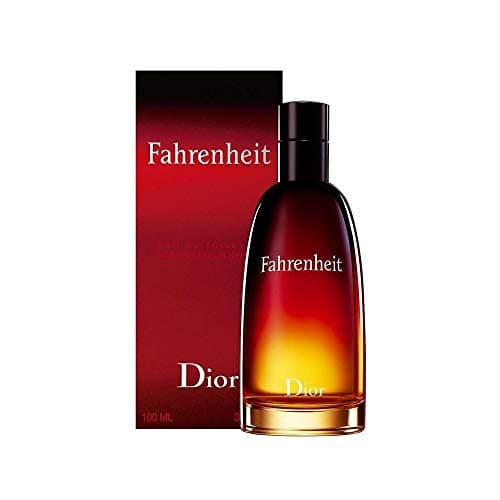
The practical consequence for your wallet is a clean three-step ladder. Around twenty dollars buys a legible version of the modern suede accord, which is the Opulence Leather proposition, and it is a genuinely good deal. Around a hundredbuys either density in that same accord or access to the older, stranger, more interesting styles — which is the Fahrenheit proposition, and it is not an upgrade so much as a different purchase. The gap in between is the least rewarding place to spend in this family, because forty-dollar leather is usually the twenty-dollar accord in a heavier bottle.
Wearing leather without clearing the room
Three rules, in order of how much difference they make.
- Halve your usual dose. Leather materials are base-heavy and diffusive, and they build on fabric rather than fading from it. Two sprays of a suede-leather EDP is a full dose and three is too many; if you are coming from a fresh aquatic where four sprays was normal, recalibrate before you leave the house. Our how to apply cologne guide has the dose table by concentration.
- Cold weather and evenings. All six of these are better below about sixty-five degrees. Heat amplifies resin and amber, which is exactly what you do not want from an already-dense fragrance, and the one genuine warm-weather exception on the page is the Tom Ford.
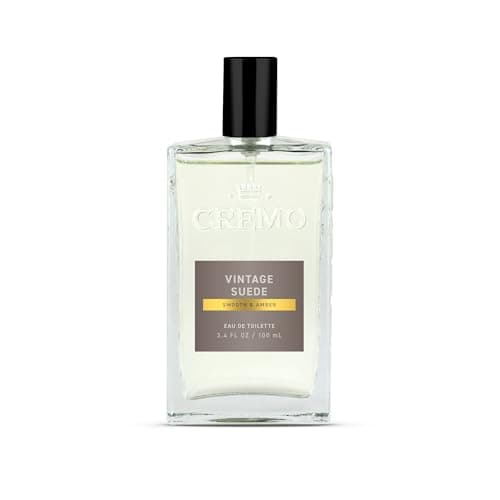
- Never for an interview, rarely for an office. Leather is a specific, identifiable, memorable smell, which makes it the opposite of what a professional setting wants. Cremo Vintage Suede is the only pick here we would wear to work, and the reasoning behind that is set out in should you wear cologne to an interview.
Where leather sits next to the families we have already ranked
Leather overlaps three of our existing family roundups and it is worth knowing which direction to step in. If the part you like is the dryness and the austerity, step toward woody colognesand specifically toward vetiver — we explain why that material behaves the way it does in what does vetiver smell like. If the part you like is the smoke, the next step is tobacco, and the honest state of that lane is that the registry is still thin on it. If the part you like is the warm, resinous sweetness underneath, you are actually in the Gulf tradition rather than in leather at all, and best Arabic colognes is the better ranking for you. That last case is the most common one, and it is why the final pick on this page is on it.