Ambergris smells marine, earthy, sweet and animalic— the closest everyday comparison is salt on warm skin, with a soft mineral sweetness behind it. Fresh material has a frankly faecal, marine odour; it is only after years of ageing at sea that it develops the character perfumery wants, which published descriptions give as sweet, earthy, marine and animalic. Its scent is also commonly likened to isopropyl alcohol without the harsh astringency, which sounds strange until you have smelled it and then makes complete sense.
And here is the fact that matters most for anything you can actually buy: in the United States, possessing or trading ambergris is prohibited under the Endangered Species Act of 1973.So when an Amazon listing names ambergris in its note pyramid — and several of the best fragrances on this site do — it is describing an ambergris-type accord built from legal synthetics, not whale-derived material. That is not a loophole or a deception. It is the industry standard, and the synthetic is genuinely excellent.
What ambergris actually is
Ambergris is a solid, waxy, flammable substance, dull grey to blackish, that forms in the digestive system of sperm whalesfrom a secretion of the bile duct in the intestines. By one researcher's estimate only about one percent of sperm whales produce it at all.
The whale passes it like faecal matter. It then floats — often for years — before washing up on a coastline, which is where almost all of it has historically been found. Occasionally it is recovered from the abdomens of dead whales. The long drift is not incidental to the smell: saltwater, sunlight and oxidation transform the fresh material from something genuinely unpleasant into the prized one. In other words, the most valuable fragrance material ever harvested from an animal is weathered whale waste, and the weathering is the part that makes it good.
Why your bottle contains the synthetic instead
The chemistry here is unusually clean, and it is why ambergris is one of the few animal materials perfumery genuinely does not need any more.
Raw ambergris contains ambrein, a terpenoid isolated as white crystals — identified by Ružička and Lardon in 1946 — which can be separated by heating the raw material in alcohol and letting the solution cool. Ambrein itself is nearly odourless. Oxidising it produces ambroxide and ambrinol, and those are the main odour components. Ambroxide is now manufactured synthetically and used extensively across the perfume industry, where it is more commonly sold under the trade name ambroxan.
So the synthetic is not an imitation of ambergris in the way a clone is an imitation of a designer fragrance. It is the actual molecule that does most of the smelling, made in a factory instead of a whale. Reference material states plainly that ambergris has been mostly replaced by synthetic ambroxide in perfumery, while noting that perfumes based on ambergris still exist.
On the legal picture, briefly, because it varies more than people expect. The US ban comes from the Endangered Species Act. Australia prohibits commercial import and export under its 1999 environment act, and India bans sale and possession under the Wild Life (Protection) Act 1972. Trade remains legal in a number of places including the United Kingdom, France, Switzerland and the Maldives. CITES does not itself cover it, on the reasoning that a waste product is not a part or derivative of a listed species.
What ambergris does in a fragrance
This is the part worth understanding even if you never think about whales again, because it explains why so many fragrances you like have this note in the base.
It is a fixative. Perfumers valued ambergris because it makes a scent last longer, holding lighter materials to the skin instead of letting them evaporate away. The synthetic does the same job.
It makes fresh fragrances feel expensive.This is the real reason it is everywhere. A bright citrus or marine accord on its own smells thin and disappears. Put an ambergris-type material underneath and the same accord gains a salty, slightly mineral, skin-adjacent depth — it stops smelling like air freshener and starts smelling like a person. Almost every modern fresh designer fragrance you can name relies on this trick.
It clings to fabric. A low-volatility base material survives on cloth far longer than on skin, which is why ambergris-led fragrances are the ones you can still smell on a jacket days later.
It divides people. The same salty-mineral quality reads as clean and skin-like to most wearers and as soapy or shower-gel-ish to a significant minority, with very little middle ground. That split is not a flaw in any particular fragrance; it is a real difference in how people perceive the material, and it is worth knowing about yourself before you spend money.
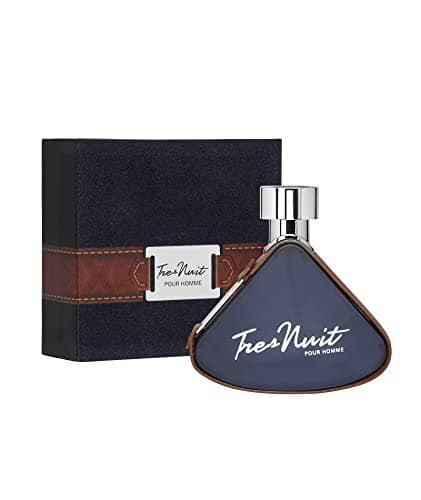
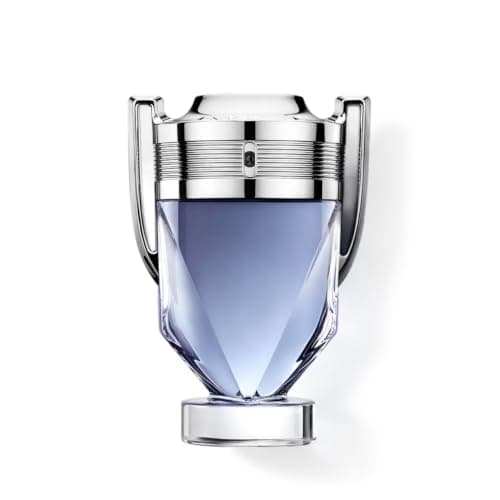
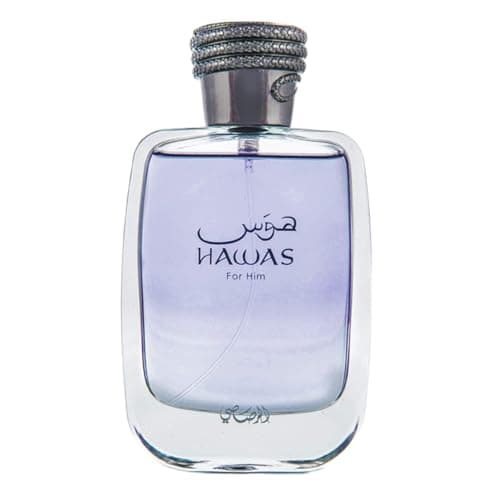
The three picks below all name ambergris in their published base and all use it differently — as warmth, as polish and as the main event. They are scored on ambergris legibility: how plainly you can pick the salty-mineral character out rather than simply benefiting from it.
How to find out whether you like it, cheaply
You almost certainly already own something with this accord in the base, so start there rather than buying anything. Look at the base notes of your current fresh fragrances for the words ambergris, ambroxan, amberwood, Ambrox, cetalox or "mineral musk." All of those point at the same chemistry. Wear one and smell your own forearm at hour three, when the top notes are gone — what is left is largely this material.
If the answer is "clean, salty, like warm skin," you are in the majority and the whole modern fresh category is open to you. If the answer is "soap" or "shower gel," that is a real and permanent perceptual difference rather than something to train out of yourself. The practical consequence is that you should avoid marine and aquatic fragrances as a family and look at woody, spicy or citrusinstead — and that you should never blind-buy a fresh designer fragrance, because almost all of them are built on this base. The cheap ways to test are in how to try cologne before buying.
Reading the label honestly
Three things worth knowing when you see this note listed:
- "Ambergris" in a pyramid means the accord, not the whale. At any price, in any mass-market fragrance, and certainly in anything sold in the United States, where trade in the real material is prohibited. Note pyramids describe impressions, not ingredient declarations.
- Ambroxan is the same idea named more precisely. It is the synthetic form of ambroxide, the actual odour compound from ambergris. A fragrance listing ambroxan is being more technically accurate than one listing ambergris, not less luxurious. See what is ambroxan.
- Do not confuse it with amber. Amber is a sweet, warm, powdery plant-resin accord built on labdanum; ambergris is marine, earthy and animalic. The names share a root and almost nothing else, and the two notes get swapped in product copy constantly. The other half of that pair is in what does amber smell like.
If you find a lump on a beach
It happens often enough to be worth one honest paragraph, because the internet is full of people photographing dog toys and hardened palm oil. Genuine ambergris is waxy rather than hard, dull grey to blackish, light enough to float, and flammable — and the fragrance trade is overwhelmingly supplied by beachcombed material rather than by whaling. The important part is the law rather than the identification: if you are in the United States, possession is prohibited under the Endangered Species Act regardless of how you came by it, and the same is true in Australia and India under their own statutes. In the UK, France, Switzerland and the Maldives, trade is legal. We are describing the legal position as published, not giving you legal advice.