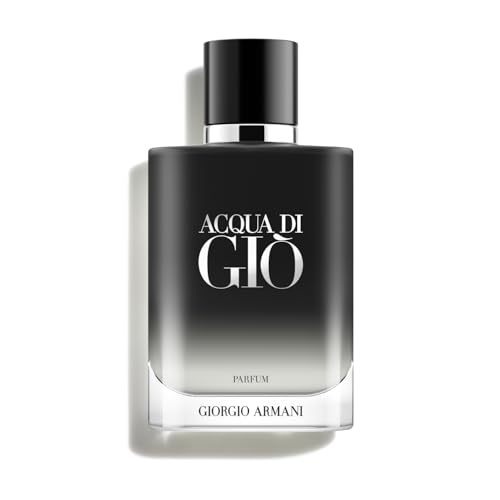
Acqua di Gio Parfum is the deepest and most expensive bottle Armani currently sells in this line, and it is very good. It is also the page most people reach while searching for something else — Acqua di Gio Profumo, the 2015 cult favorite that is now listed as discontinued on Armani's own US site. So we are going to answer that question before we describe the scent, because it is the part that costs money: the 2023 Parfum is not Profumo under a new name, and the published note lists do not agree on whether it even contains the material that made Profumo what it was.
If you have never cared about Profumo and simply want to know whether this bottle is worth it: yes, if you want the Acqua di Gio shape with real weight behind it and you are shopping for cold weather. No, if you want the bright, weightless thing people picture when they hear the name — that is the eau de toilette, it costs considerably less, and it scores higher on this site.
If you came here looking for Profumo
Acqua di Gio Profumo launched in 2015 and became the most loved bottle in the family: Armani described it with bergamot, marine accords and incense, and that salt-and-smoke combination is the reason people still search for it a decade later. It is now marked discontinued on Armani's US website. The notice gives no end-of-production date and no reason, which is normal and also unhelpful — it means nobody can tell you how long remaining stock will last.
Parfum arrived in 2023 and is widely described as its successor. Here is the honest accounting of what carried over and what did not, taken from published note lists rather than from our noses:
| Material | Profumo (2015) | Parfum (2023) |
|---|
| Bergamot | Yes | Yes |
| Incense / olibanum | Yes | Yes |
| Patchouli | Yes | Yes |
| Marine accord | Yes — the signature | Disputed across retailers |
| Ginger | No | Listed by Armani's retail copy |
| Clary sage, rosemary | No | Yes |
That fourth row is the whole story, and we are not going to smooth it over. The note list carrying Armani's own product copy gives Parfum as bergamot and ginger on top, clary sage and rosemary through the heart, and patchouli and incensein the base — with geranium mentioned in the prose but absent from the bulleted list. Several other retailers publish a different pyramid for the same bottle: marine notes and bergamot on top, rosemary, clary sage and geranium in the heart, and olibanum and patchouliunderneath. Olibanum is simply frankincense, so those two lists agree about the base. What they disagree about is the presence of the marine accord and of ginger — which is to say, they disagree about exactly the material a Profumo fan came looking for.
We cannot resolve that from published sources, so we are not going to pretend to. What we can tell you is the practical consequence: if the salty-smoky quality of Profumo is the specific thing you want back, treat Parfum as a sample purchase rather than a replacement purchase. It is a woody-aromatic fragrance with an incense base that happens to share a name and a spine with the bottle you miss. That is not the same as being it, and anyone telling you Profumo was “rebottled” is going further than the evidence does. Our guide to trying cologne before buying covers the cheap ways to do exactly that.
Four live bottles, one name — sort this out first
This line has become the most confusing shelf in mainstream men's fragrance, and it is a bigger practical risk than anything about how the liquid smells. On 7 November 2026 we ran a single catalog search for this fragrance and recorded what came back in stock. The result was four different fragrances across four bottle sizes, all with “Acqua di Gio” in the title:
| Bottle | Concentration | What it is for |
|---|
| Acqua di Gio | Eau de toilette | The original. Bright marine citrus, the most versatile and the cheapest size-for-size |
| Acqua di Gio Profondo | Eau de parfum | Dark and mineral. Cypress, mastic and musk; never warms up |
| Acqua di Gio Parfum | Parfum | This one. Dry herbs over patchouli and incense — the warm, smoky reading |
| Acqua di Gio Elixir | Elixir | Woody and leathery, with patchouli. The newest and the furthest from the original idea |
Four fragrances, in 1.0, 1.6, 3.3 and 6.7 ounce bottles, with prices that cross over between them — a small bottle of one line member can cost more than a larger bottle of another, which is exactly what we saw in that search. Two rules follow, and they are the same two we give for every brand that does this:
- Read the word after “Gio.”Profondo, Parfum and Elixir are three different fragrances, not three strengths of one. Only the plain “Acqua di Gio” eau de toilette is the scent most people mean by the name.
- Divide price by ounces before you compare anything. The sticker price tells you almost nothing here. The card below is the 3.3 oz Parfum, named explicitly so you can do that math yourself.
If the concentration words themselves are the confusing part, our fragrance concentrations guide explains what parfum, eau de parfum and eau de toilette actually mean, and our Acqua di Gio Profondo review makes the same warning from the other side of the shelf.
How it smells
Armani's own copy frames the collection as “inspired by nature and the invigorating freshness of the ocean wave,” and says this bottle “re-invents the legendary aquatic freshness with a new depth of woody, smoky warmth and intensity.” That is unusually accurate marketing: woody, smoky warmth is the right description, and intensity is the right word for the difference you notice first.
Working from the published pyramid rather than from a lab we do not have: the opening is bergamot with a dry, slightly peppery lift behind it. The heart is where this bottle diverges from everything else in the family — clary sage and rosemary are aromatic herbs, not marine materials, and they read green, dry and faintly medicinal in the best sense of that word. The base is patchouli and incense, and it is the longest-lived part: earthy, resinous and genuinely smoky, with none of the sweetness that usually arrives with a modern patchouli base.
What that adds up to on skin is a fragrance that opens recognizably Acqua di Gio and then goes somewhere the line has never been. It does not smell like the sea after the first half hour. It smells like dry herbs over smoke, which is a cold-weather, indoor, after-dark kind of smell. If you have only ever worn the eau de toilette, the honest warning is that this will not feel like an upgrade of it — it will feel like a different decision.
Performance, scored honestly
We have not lab-tested this and we are not going to imply otherwise. The read below is compiled from the stated concentration, Armani's own composition copy and what wearers consistently report, scored against our published rubric.
Parfum is the highest concentration in the line, and the 9 for longevity is the one score we are most confident about: a parfum built on patchouli and incense has every structural reason to last, because base-heavy resinous materials are the slowest-evaporating things in perfumery. Projection gets an 8rather than a 9 — this is dense rather than loud, and dense fragrances tend to sit closer than their strength suggests. Our sillage and projection guide explains why those two are not the same measurement, which is exactly the confusion that leaves people disappointed by high concentrations.
Value is a 6, and that is the number we expect pushback on. It is not a comment on quality. It is arithmetic: this is the premium bottle of a family whose cheapest member we score 8.2— higher than this one — largely because the eau de toilette is more versatile and costs much less. Paying the premium for a narrower fragrance is a legitimate choice, but it is a specialist's choice, and the value column has to say so. The refillable bottle takes some of the sting out over time, and it is a real feature rather than packaging copy.
Who should buy it, and who should not
Buy itif you already know and like the Acqua di Gio bergamot spine and you want a version with weight for fall and winter, evenings, and rooms where a bright aquatic would disappear. It is also the right pick if incense and dry herbs are materials you actively enjoy — there is no sweetness, no fruit and no gourmand element anywhere in this bottle, which is rarer than it should be at this price.
Skip it if you want the fragrance the name is famous for. The original eau de toiletteis the bright marine citrus everyone means, it scores 8.2 here against this bottle's 7.8, and an equivalent-size bottle of it costs considerably less. Skip it too if you are shopping for hot weather — smoke and patchouli in July is a hard sell, and our best summer colognes list has better answers.
Consider Profondo insteadif what you want is depth without warmth. Profondo goes mineral rather than smoky: cypress, mastic and musk over marine notes, and it never heats up. It scores 7.6 to this bottle's 7.8, which is close enough to call a preference rather than a ranking, and the two are genuinely different experiences. Our Profondo vs Dylan Blue comparison takes that mineral character apart in detail.
Consider a clone if the shape appeals and the price does not. This line is one of the most copied in fragrance, and some of the copies are good; we rank them in best Acqua di Gio dupes. Be clear-eyed about what you are buying, though: almost every clone targets the eau de toilette, because that is the famous one. We are not aware of a credible clone house targeting this bottle specifically, so a dupe is a route into the original idea rather than into this one.
Where it sits on this site
Against the rest of the Armani line, the ranking on our rubric runs: the eau de toilette at 8.2, this Parfum at 7.8, Profondo at 7.6. Those numbers are close and the differences are almost entirely versatility and value — all three are well-made fragrances, and the cheapest one wins because it can be worn the most often.
Against the wider field, this is a specialist bottle rather than a signature. If you want one expensive fragrance that is correct everywhere, Bleu de Chanelis the better answer at 8.0 and we say so plainly — and if you are weighing that bottle against the other designer default, our Bleu de Chanel vs Sauvage comparison runs the same argument about refinement against output that this page runs about depth against versatility. If you want smoke and resin as the main event rather than as a finish, our best woody colognes roundup is the right list and several of its picks cost far less.