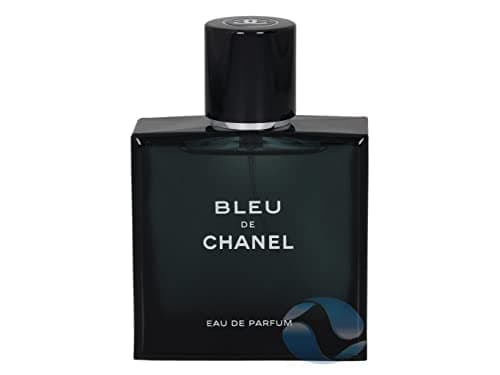
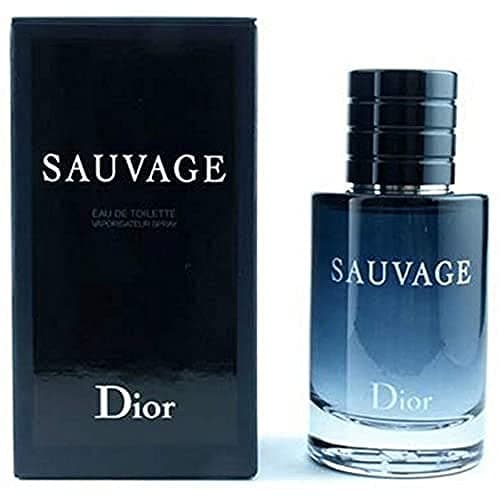
Dior Sauvage wins this page, 8.4 to 8.0. And we send more readers to Bleu de Chanel anyway. That is not a hedge, and the next paragraph explains exactly why both of those things are true at once.
Look at where the margin comes from. Sauvage takes longevity 9 to 8, projection 9 to 7 and value 7 to 6. Bleu de Chanel takes scent 9 to 8 and versatility 10 to 9. Every single point of Sauvage's lead is how muchfragrance you get and what it costs. Every point of Bleu's is how good it is and where you can wear it. Our rubric weights all five columns equally, so Sauvage finishes ahead — but most people, most of the time, are better served by the bottle that smells better and goes everywhere than by the one that reaches further. That is the entire comparison in two sentences, and the rest of this page is the evidence.
The short version by situation: buy Sauvage for nights out, dates, cold weather and your first designer bottle. Buy Bleu de Chanel for work, interviews, formal events and anything where being noticed for your fragrance would be a failure. If smelling distinctive matters to you, neither is the answer and we will get to that honestly at the bottom.
First: make sure you are comparing the right two bottles
This is the single most expensive mistake available on this page, so it goes before the scent descriptions. Neither of these is one fragrance.
Sauvage, released in 2015, is now a family of five: eau de toilette, eau de parfum, parfum, Elixir and the 2026 Extrait, the first one built on oud. Bleu de Chanel, released in September 2010, is four bottles deep: the 2010 eau de toilette by Jacques Polge, the 2014 eau de parfum also by Jacques Polge, the 2018 parfum by OlivierPolge — his son and successor at Chanel, which is a reason to expect a genuinely different reading rather than the same formula with more oil in it — and L'Exclusif, an extrait-strength parfum Olivier Polge added in August 2025 on sandalwood and cistus labdanum.
So “Bleu de Chanel vs Sauvage” is really twenty possible comparisons. This page compares the two versions people actually mean and that we have scored properly: the Sauvage eau de toilette (the reference version everyone benchmarks) and the Bleu de Chanel eau de parfum (the version we recommend over the thinner original). Both bottle families use near-identical packaging across concentrations, so read the concentration off the box, not the name. Armani runs the same trap one step worse — four live fragrances rather than three concentrations — and we map it in our Acqua di Gio Parfum review. If the labels themselves are unclear, our fragrance concentrations guide and eau de parfum vs eau de toilette both sort it out.
The mechanism: one molecule each, pointing opposite directions
Both of these fragrances are solving the same brief — a modern, masculine, citrus-opening scent that does not read as a cheap aquatic — and they do it with different signature materials. Once you see which, every score on this page stops being a matter of taste and starts being predictable.
Sauvage is ambroxan. Stripped down, it is bright Calabrian bergamot slammed into a very large dose of ambroxan, with Sichuan and pink pepper, lavender, geranium, patchouli and elemi through the heart, and ambroxan, cedar and labdanum in the base. Ambroxan is a clean, slightly salty, radiant material, and the key word is radiant— it pushes outward. It is low-volatility enough to last and loud enough to fill a room, which is exactly why the longevity and projection columns go to Dior. It is also why a minority of people find Sauvage sharp or headache-inducing: there is a lot of one assertive molecule in there. Our ambroxan guide explains the material properly.
Bleu de Chanel is Iso E Super.Its published pyramid — and we are quoting the 2010 eau de toilette's, because the lists for the richer versions are not consistent across sources and we are not going to average retailer copy into something that looks authoritative — runs lemon, mint, pink pepper and grapefruit on top; ginger, Iso E Super, nutmeg and jasmine through the heart; labdanum, sandalwood, patchouli, vetiver, incense, cedar and white musk in the base. Iso E Super smells like dry, abstract, almost transparent wood, and its job is the opposite of ambroxan's: it fuses. It smooths the citrus, the spice and the woods into a single seamless surface. It does not push outward, which is precisely why projection scores a 7.
So the trade is not sweet versus dry or fresh versus woody. It is radiance versus cohesion. Sauvage spends its material budget on reach; Bleu de Chanel spends it on smoothness. That is a real engineering decision, not marketing, and it means the 7 for projection on the Chanel is a description rather than a criticism — the fragrance is doing what it was designed to do.
One more honest note on the smell itself: Sauvage reads cool, sharp and very slightly sweet-synthetic in a way a lot of people find addictive. Bleu de Chanel has nosweetness anywhere — the ginger and nutmeg spice it rather than sugar it, and there is no gourmand or fruity element at all. If you have ever wondered why Sauvage works on a nineteen-year-old and Bleu works on a sixty-year-old, that is the reason.
Situation by situation
This is where a comparison earns its keep, because “which is better” is almost never the real question.
| Situation | Buy | Why |
|---|
| Office, shared desk, open plan | Bleu de Chanel | Versatility 10, projection 7. It sits near the skin. Sauvage finishes last in our office roundup for projecting too far |
| Job interview | Bleu de Chanel | Dry, unsweet and quiet. Nobody has ever been marked down for it |
| Wedding, funeral, formal event | Bleu de Chanel | The reason the versatility column is a 10 — it is correct in rooms where a loud fragrance is a social error |
| Date, bar, night out | Sauvage | Projection 9 and a documented compliment record. Being noticed is the job here, and Sauvage is built for it |
| First designer bottle on a budget | Sauvage | Far cheaper per ounce, more forgiving and easier to like. Value 7 against 6 |
| Cold weather | Sauvage | The ambroxan-and-labdanum base carries better in cold air; Bleu is quieter and quieter still in the cold |
| Real summer heat | Bleu de Chanel | Sauvage runs heavy in real summer heat. Bleu's dry structure does not amplify the same way |
| One bottle for everything | Bleu de Chanel | Versatility 10 is the whole argument. It is the better single-bottle answer even though it scores lower overall |
| You want to smell unique | Neither | Both have been global best-sellers for a decade or more. See below |
Performance, and why the gap is smaller than it looks
We have not lab-tested either of these, and we are not going to imply we did. Both reads are compiled from the stated concentrations, each brand's own composition copy and what wearers consistently report, scored against our published rubric.
On that basis Sauvage is one of the strongest eau de toilettes on the market: eight-plus hours of wear with a projection cloud that fills a room for the first couple of hours is the common report, and one or two sprays is genuinely plenty. Bleu de Chanel's eau de parfum carries most of a working day and announces itself to people who are already near you.
Here is the part worth internalizing: the eau de toilette out-performs the eau de parfum, and that is not a contradiction. Concentration describes how much fragrance oil is in the bottle. It does not describe how far the result travels, because that depends on the volatility and radiance of the specific materials. Sauvage is built around a material chosen partly for reach; Bleu de Chanel is built around one chosen for texture. Our sillage and projection guide takes that apart properly, and it is the single most common source of disappointment with an expensive bottle.
It is also worth saying plainly that both lose the performance argument to bottles costing a fraction as much. Our longest-lasting colognes page is full of eau de parfums that out-project both of these, and if raw output per dollar is your actual priority then the honest answer to “Bleu de Chanel or Sauvage” is neither.
Value, and the part nobody wants to hear
Sauvage takes the value column 7 to 6, and the reason is liquid per dollar rather than sticker price. The two bottles we link sit at a similar headline figure, but the Sauvage is twice the size — so per ounce it is roughly half the money, while performing harder. That is a real advantage and we are not going to talk around it.
But value in this category is slipperier than a price comparison, for one specific reason: a large part of Sauvage's value proposition is that it is a safe signature, and that only pays off if you are happy smelling like the crowd. If the ubiquity bugs you, the value drops immediately — you have bought a fragrance whose main selling point you do not want. Bleu de Chanel has the same ubiquity problem and a different payoff: what you are buying there is the smoothness and the manners, and those keep working regardless of how many other people own the bottle.
A third consideration that matters more than either: for Bleu de Chanel specifically, it is worth pricing an authorized retailer — a Chanel counter, a department store, chanel.com — before you buy anywhere else. When we searched a marketplace catalog for it on 31 October 2026, one query returned four different products across three concentrations with a tenfold price span, including a 1.5 ml miniature and a differently named bottle that was not the fragrance at all. Divide price by ounces before you compare anything. Our where to buy cologne page covers the channels, and is Dior Sauvage worth it? works the cost-per-wear math on the other bottle in full.
If what you actually want is to smell different
Then this comparison is the wrong one, and we would rather tell you that than sell you a bottle. Both of these have been among the best-selling men's fragrances in the world for over a decade. You will meet both on strangers regularly. Choosing between them does not solve the problem of smelling like everybody else; it just picks which crowd you join.
There are three honest routes out. The clones are the cheapest: best Bleu de Chanel dupes and Sauvage alternatives and dupes both get the shape for much less money, and we are straightforward in both places about what the cheaper bottles give up — mostly the smoothness, which on the Chanel side is specifically the thing you were paying for. The second route is a different lane entirely: cheap colognes that smell expensive is the counter-argument to this whole page. The third is to go up rather than sideways, and niche vs designer fragrance is an honest account of what that money does and does not buy.
The verdict, stated plainly
Sauvage is the higher-scoring fragrance and the better buy for a reader who wants performance, a crowd-pleaser, a cold-weather bottle or a first designer purchase. Bleu de Chanel is the better-made fragrance, the more versatile one, and the better buy for a reader who needs one bottle that is correct in every room and is past the stage of wanting to be noticed for it.
If you are genuinely stuck, the tiebreaker we would use is not about scent at all: where will you wear it most? Count the hours. If most of your fragrance-wearing happens at a desk, in meetings or at formal events, buy the Chanel and accept that it scores 0.4 lower on a rubric that rewards volume. If most of it happens in the evening, buy the Dior and enjoy being the loudest thing in the room. The full single reviews are at Bleu de Chanel and Dior Sauvage, and both go deeper on their own bottle than a comparison page can.