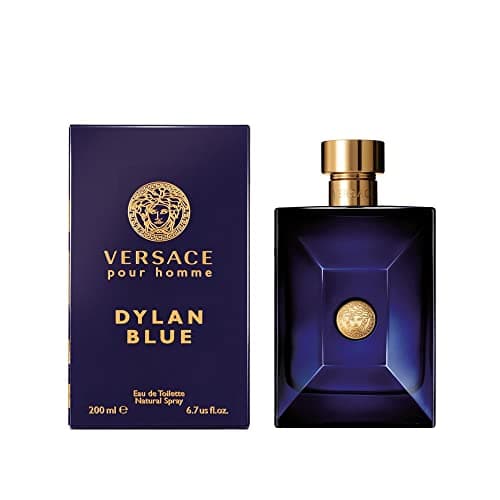
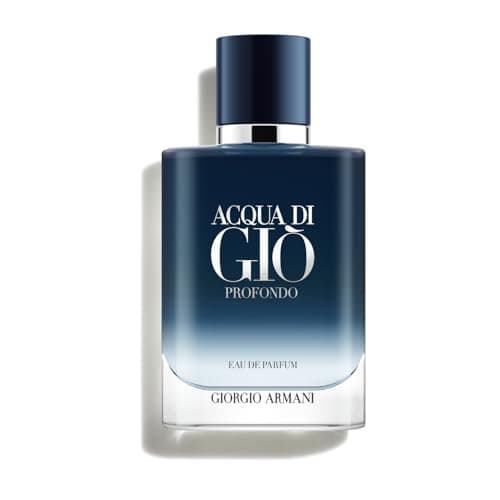
Buy Giorgio Armani Acqua di Gio Profondo if you want the most expensive-smelling fresh fragrance of the two and you mostly wear scent in cold air and formal rooms. Buy Versace Dylan Blueif you want roughly the same idea — fresh on top, dark underneath — for a fraction of the cost per wear, and you can live with a base that is grittier and much more widely worn.
Here is the uncomfortable part, and it is the reason this page exists. Profondo is the better fragrance and Dylan Blue is the higher score. Profondo takes the scent column 9 to 8 — we think it is the more interesting composition and we are not going to pretend otherwise — and it still finishes at 7.6 against Dylan Blue's 8.6, because it loses versatility and gets beaten badly on value. A full point of gap created almost entirely by price and bottle size is worth understanding before you spend, so that is what the rest of this page is about.
One housekeeping note first: if you are actually deciding between Dylan Blue and the original Acqua di Gio eau de toilette, that is a different contest with a different answer, and we settle it separately in Acqua di Gio vs Dylan Blue. This page is specifically about Profondo, the darker eau de parfum, which changes the comparison more than its name suggests.
The two pyramids, side by side
| Acqua di Gio Profondo | Versace Dylan Blue |
|---|
| Concentration | Eau de parfum | Eau de toilette |
| Launched | Disputed — see the version warning below | July 2016 (Alberto Morillas) |
| Top | Green mandarin, bergamot, aquozone and sea notes | Calabrian bergamot, grapefruit, fig leaf, water accord |
| Heart | Mastic absolute, cypress, lavender, rosemary | Violet leaf, papyrus, black pepper, patchouli, ambroxan |
| Base | Patchouli, amber, mineral notes, musk | Mineral musk, tonka bean, incense, saffron |
| What makes it dark | Mineral and herbal — stone, resin, dry evergreen | Ambroxan and pepper — a dry, faintly smoky rasp |
| Reads as | Wet rock and cold sea air, held for hours | Bitter citrus, then green pepper, then dry mineral smoke |
| Common bottle size | 3.3 oz | 6.7 oz |
| Our score | 7.6 | 8.6 |
Those pyramids are closer on paper than they are on skin, and the reason sits in the row labeled “what makes it dark.” Both bottles solve the same problem — a plain citrus-marine fragrance is forgettable — and they solve it with completely different materials.
The one difference that decides it: dry stone vs dry smoke
Profondo goes mineral.The mastic absolute, cypress and rosemary in the heart are resinous and evergreen rather than sweet, and the base is explicitly built on mineral notes with patchouli and amber behind them. The effect wearers describe is wet rock, salt and cold air — and crucially, it does not warm up. It is the same temperature at hour four as it is at minute four, which is why it works in formal rooms and cold weather, and why it can feel austere if you were hoping for comfort.
Dylan Blue goes smoky-peppery. The fig leaf in the opening is green and milky rather than fruity, the black pepper and papyrus make the middle rasp slightly, and the base pairs mineral musk with tonka bean, incense and saffron. Tonka is the detail that matters: there is a thread of warmth in Dylan Blue that Profondo does not have at all. That warmth is exactly what makes the Versace easier to wear across a wider range of temperatures, and it is also what makes it read less expensive. If the vocabulary here is new, our guide to fragrance notes explains how a published note list maps onto what you actually smell, and what is ambroxan covers the single material doing the most work in the Versace.
Put plainly: smell these blind and most people will say Profondo smells more expensive and Dylan Blue smells more likable. Both judgments are correct, and which one you should buy is not a question a review can answer for you.
Performance: the eau de parfum does not win
This is the result that surprises people, so it is worth being precise about what we are and are not claiming. We have not lab-tested either of these and we will not pretend we did — the read below is compiled from each brand's stated concentration plus what wearers consistently report, scored against our published rubric.
By that measure the two are level on longevity — both score 8 — and Dylan Blue takes projection 9 to 8, despite being the weaker concentration on the box. An eau de parfum losing a projection contest to an eau de toilette is a useful reminder that concentration describes how much fragrance oil is in the bottle, not how far the result travels. A dense mineral composition can sit close to the skin; a peppery ambroxan one can be lighter and still fill a room. Our fragrance concentrations guide explains why the label is a poor proxy for strength, and sillage and projection explained separates the two things people mean when they call a fragrance “strong.”
The practical consequence: if raw performance is the whole reason you were considering stepping up to the eau de parfum, the step up does not buy it. What it buys is a different and arguably better smell.
Value, which is where this is actually settled
Profondo scores a 6 in the value column — one of the lower marks we have given a fragrance we otherwise like — and Dylan Blue scores a 9. Two things stack to produce that gap, and neither is about quality.
First, the bracket: Profondo sits in the designer-premium tier while Dylan Blue is one of the most reliably discounted designer bottles on the market, so the real-world gap is wider than the list prices suggest. Second, the size: the commonly stocked Profondo is 3.3 oz while the commonly stocked Dylan Blue we link below is 6.7 oz. That is roughly double the liquid at a materially lower price, which puts the cost per wear in a different conversation rather than at a different point in the same one.
We are not going to type numbers into prose that go stale the week after publication. The live, date-stamped price for each bottle is in the cards below, pulled from the retailer rather than written by us. What we will commit to in words is the shape: if your decision is financial, it is already made, and the argument for Profondo has to rest on the smell alone. Our framework for when a premium is worth paying is in how much should you spend on cologne.
A version warning on the Armani, because it costs people money
Profondo has shipped as an eau de toilette, an eau de parfum and a parfum, plus a brighter limited edition called Profondo Lights — and the same Armani line separately contains Acqua di Gio Profumo, an older, smokier incense-and-patchouli fragrance whose name differs from Profondo by three letters. Retailer and database listings openly disagree on the launch years, which is why the table above says “disputed” instead of inventing a date we cannot stand behind.
The rule that actually prevents a wrong purchase is simpler than the history: read the concentration off the box, not the name. Everything on this page about Profondo refers to the eau de parfum, which is the listing we link. The full breakdown of the thicket is in our Acqua di Gio Profondo review. Dylan Blue has its own version footnote, much milder: there is a Dylan Blue eau de parfum and a Dylan Blue Pour Femme, and this page is about the original men's eau de toilette reviewed at Versace Dylan Blue.
Where each one is the obvious answer
Profondo wins: cold weather, offices with a dress code, weddings and funerals, interviews, and any room where you would rather register as composed than as fun. It is also the right pick if you already own something in the Dylan Blue register and want the grown-up version of that idea rather than a second copy of it. See best office colognes and best winter colognes.
Dylan Blue wins: nearly everything else. It is the better buy for a first or second designer bottle, for a rotation on a budget, for genuinely hot weather, for evenings, and for anyone who wants one fresh bottle that is never wrong and never thin. See best fresh colognes and best colognes under $100.
Neither wins if smelling unusual is the goal. Dylan Blue is among the most-worn fresh fragrances of the last decade and Profondo is a mainstream Armani pillar; you will meet both of them on other people. If individuality is the brief, niche versus designer fragrance is the better aisle.
The third bottle, for the reader this comparison fails
There is a buyer neither pick serves: the one who wants a clean, bright, unambiguously fresh fragrance and is not actually looking for a dark underside at all. Both bottles above are built around that darkness, so for that reader the answer is the plain original — Giorgio Armani Acqua di Gio eau de toilette, which scores 8.2 here, holds one clear citrus-marine idea from the first minute to the last, and earned the only 10 we have awarded for versatility anywhere on this site. It is softer than either headline pick, and that is the point.
It is the third option rather than the answer because it gives up the one thing this page is about. If you came here because plain aquatics bore you, the original is not your bottle and the choice at the top stands.